


ABA TherapyBlog
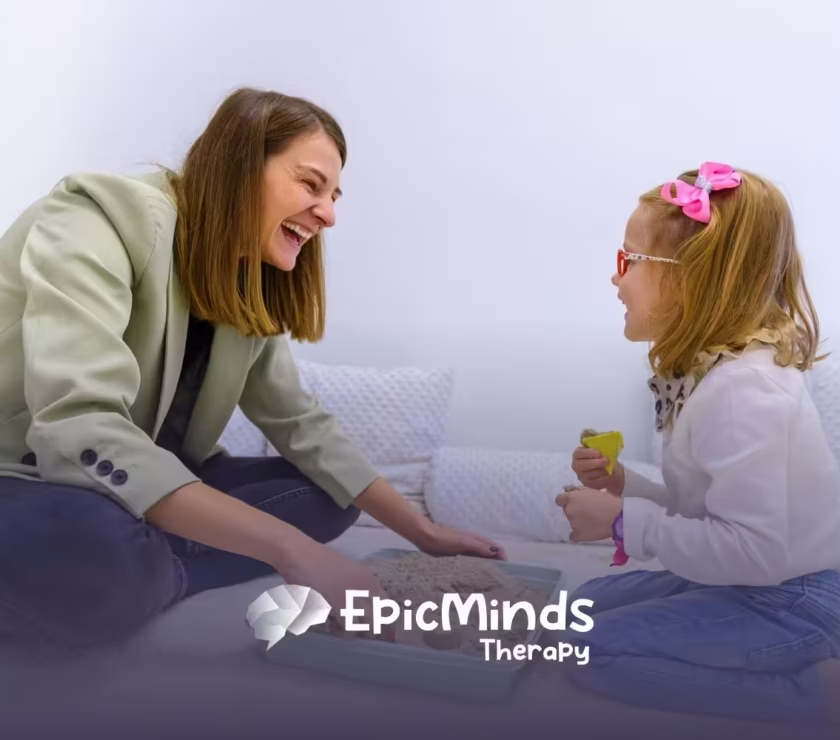
Therapy does not always begin with a worksheet or a table. Many effective ABA sessions start with a toy, a game, or a shared interest. Child led aba is an approach within Applied Behavior Analysis where teaching follows the child’s motivation. Instead of directing every activity, the therapist uses the child’s interests to create structured learning opportunities.
The goal of child led aba is to increase engagement, strengthen communication, and promote skill development in natural contexts while still applying evidence-based behavioral principles. This article explains what child led aba is, how it works, and what research says about its effectiveness.
What Is Child Led ABA?
Child led aba refers to ABA sessions that prioritize the child’s current interests to guide instruction. It is closely related to naturalistic and play-based behavioral interventions.
In traditional structured ABA, instruction may follow a therapist-driven sequence. In child led aba, learning opportunities are embedded into activities the child chooses.
The therapy remains systematic. Data is collected. Goals are measurable. The difference lies in how teaching opportunities are introduced.
How Child Led ABA Works
Even though child led aba appears flexible, it follows structured behavioral principles.
Key steps include:
- Observe what the child is interested in
- Join the activity
- Create learning opportunities within that activity
- Prompt target skills
- Reinforce immediately
- Fade prompts gradually
This maintains consistency with ABA science while increasing motivation.
Research Supporting Child Led ABA Approaches
A 2024 PubMed-indexed study examined naturalistic developmental behavioral interventions, which share core principles with child led aba. The review found improvements in communication, social interaction, and adaptive skills when instruction was embedded into child-driven activities.
These findings align with structured naturalistic approaches that prioritize engagement. While the term child led aba is not always used in research literature, the underlying principles are supported in behavioral science.
Child Led ABA vs Structured Table-Based ABA
Both approaches are part of Applied Behavior Analysis.
Structured ABA often includes:
- Discrete Trial Training (DTT)
- Repetitive skill practice
- Therapist-directed sequences
Child led aba includes:
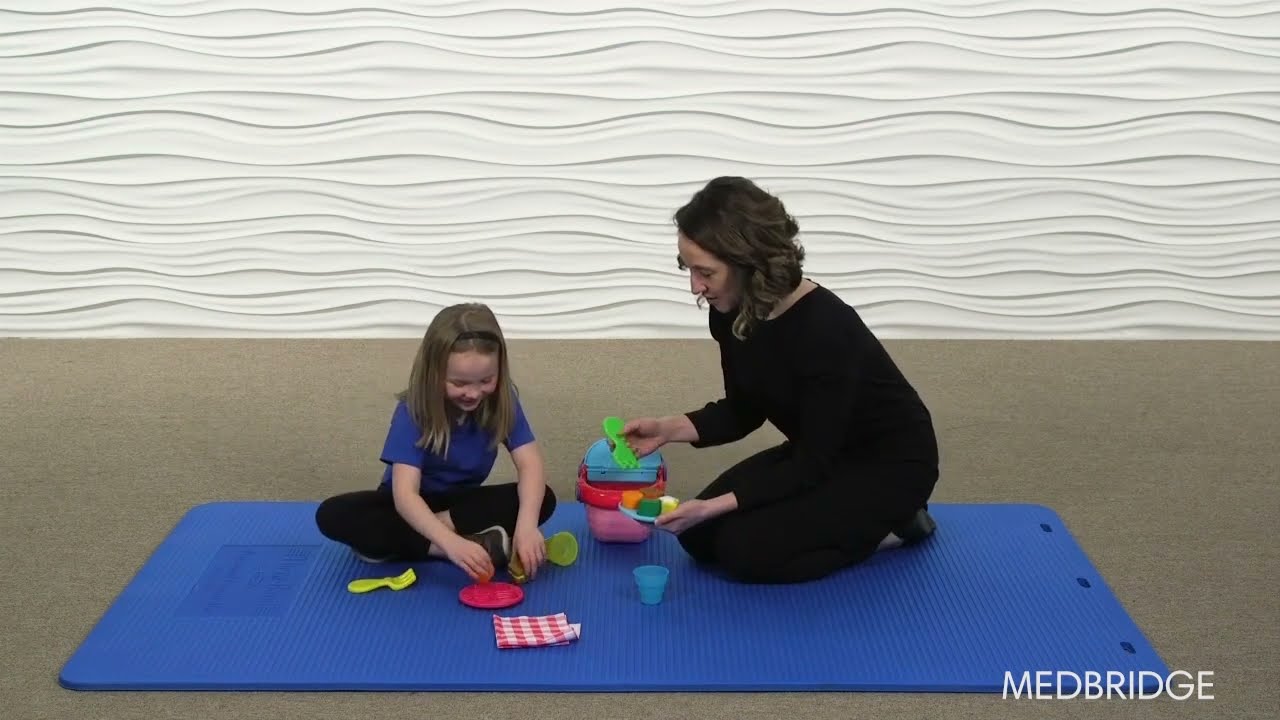
- Play-based interaction
- Natural environment teaching
- Interest-driven instruction
Many comprehensive programs combine both methods. Research supports blending structured and naturalistic approaches to promote generalization.
What Skills Are Taught in Child Led ABA?
Child led aba targets the same core skills as other ABA models.
These include:
- Expressive language
- Receptive language
- Social initiation
- Joint attention
- Play skills
- Self-help routines
The difference is how opportunities are presented.
For example:
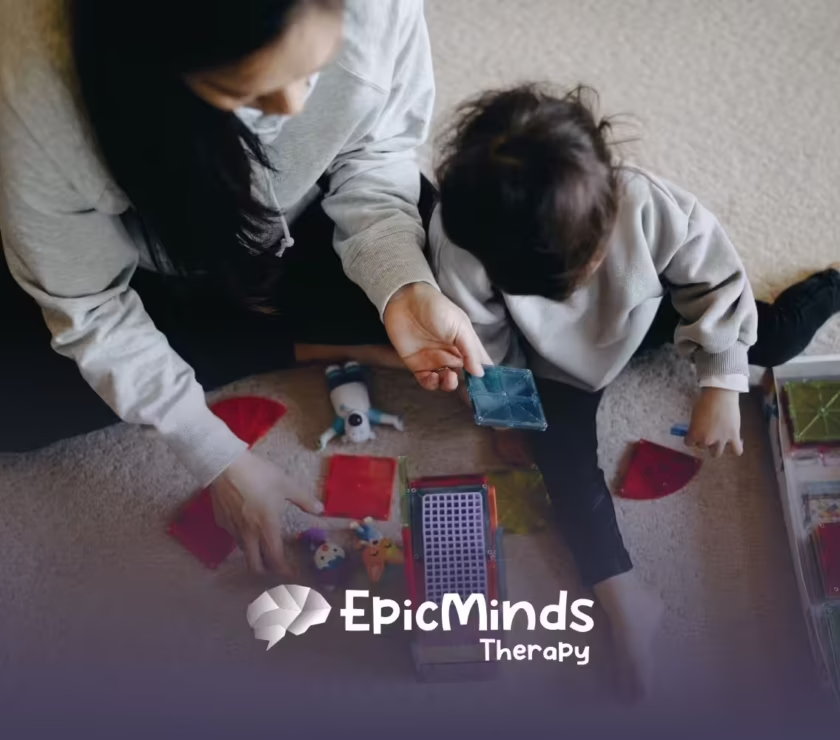
If a child is playing with blocks, the therapist may prompt color labeling, counting, or requesting within that activity.
Case Example: Child Led ABA in Practice
Child profile:
- Age 3
- Limited verbal communication
- Strong interest in trains
Session approach:
- The therapist joins train play.
- When the child reaches for a train, the therapist pauses.
- Prompt: “Train please.”
- When the child responds, the train is delivered immediately.
Over time:
- Independent requests increase
- Eye contact improves
- Turn-taking develops
This structured learning within preferred activities reflects child led aba.
Benefits of Child Led ABA
Research on naturalistic interventions suggests the following benefits:
- Increased engagement
- Improved spontaneous communication
- Greater generalization across settings
- Stronger parent involvement
Because learning occurs in meaningful contexts, children may demonstrate skills more consistently in daily life.
Parent Involvement in Child Led ABA
Parent training is often integrated.
Parents learn to:
- Follow the child’s lead
- Create communication opportunities
- Reinforce spontaneous language
- Model social interaction
Consistency across home and therapy settings strengthens progress.
Is Child Led ABA Less Structured?
No. Child led aba still requires:
- Clear goals
- Data collection
- Behavioral assessment
- Ongoing supervision
It differs in presentation, not in scientific foundation.
When Is Child Led ABA Most Effective?
Child led aba is particularly effective for:
- Early learners
- Children developing functional communication
- Children who resist table-based instruction
- Building spontaneous language
However, some children benefit from a combination of structured and child-led approaches.
Addressing Misconceptions About Child Led ABA
- It is not unstructured play.
- It does not remove measurable goals.
- It is not separate from ABA science.
- It still relies on reinforcement principles.
The method aligns with evidence-based ABA frameworks.
Conclusion
Engagement drives learning. Child led aba uses a child’s natural interests to create structured, data-driven opportunities for skill development. Research supports naturalistic approaches that embed teaching into meaningful interaction.
At Epic Minds Therapy, our clinicians design individualized ABA programs that may include child led aba strategies when appropriate. Each treatment plan is built around measurable goals and evidence-based methods.
If you are looking for an ABA program that balances structure with engagement, schedule a comprehensive evaluation with Epic Minds Therapy today. Our clinical team can assess your child’s needs and determine the best approach for meaningful progress.
FAQs About Child Led ABA
What is child led aba?
Child led aba is an ABA approach where therapists use a child’s interests to guide structured learning opportunities.
Is child led aba evidence-based?
Yes. It aligns with research on naturalistic developmental behavioral interventions within ABA.
Does child led aba replace structured ABA?
No. Many programs combine both structured and child-led strategies.
What skills are taught in child led aba?
Communication, social skills, play skills, and daily living skills are commonly targeted.
Can parents use child led aba at home?
Yes. With proper coaching, parents can create structured learning moments during play and daily routines.
Sources
- https://pmc.ncbi.nlm.nih.gov/articles/PMC9850869/
- https://link.springer.com/article/10.1186/s40359-024-02045-5
- https://childmind.org/article/what-is-applied-behavior-analysis/
- https://pubmed.ncbi.nlm.nih.gov/39476396/
- https://www.autismspeaks.org/expert-opinion/what-discrete-trial-training
- https://www.commonwealthautism.org/teaching-outside-of-the-table/