Explore the Epic Minds Therapy Blog — your go-to resource for in-depth insights, evidence-based ABA strategies, and expert perspectives on autism care. Empowering families, inspiring professionals, and setting the standard for ABA therapy excellence.
Every June, families reach out to our clinical team with a version of the same question: “How do we not lose the progress we’ve made?“ The concern is...
Most articles on travel with an autistic child focus on what to do during the trip: how to handle a meltdown at a rest stop, what to do when the hotel room does not...
For most families, the last day of school is a day to celebrate. For families of autistic children, it can be the start of one of the most stressful stretches of the...
The first day of ABA therapy is not a test. It is a low-pressure, play-based introduction between your child and their care team, held in your child’s natural...
The most effective calming tools for autism are the ones matched to a child’s specific sensory profile — deep-pressure tools like weighted blankets and lap pads...
A successful Halloween with an autistic child starts six to eight weeks early. The biggest wins come from picking a comfort-first costume (no masks, no scratchy seams,...
Every article on this blog is written by a member of our clinical
team — the psychologists, behavior analysts, and therapists who
work with autistic children, teens, and families every day.
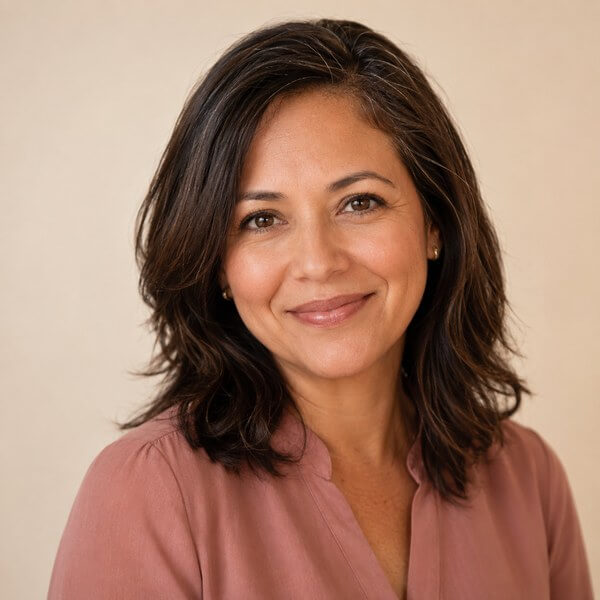
Dr. Naomi Reyes
PsyD, BCBA-D
Naomi has worked in autism care since 2008 and centers her work
on the diagnostic process — the part of the journey that
often feels most overwhelming for families…
Naomi has worked in autism care since 2008 and earned her
doctorate in clinical psychology in 2016, followed by her BCBA-D
certification in 2018. Her career has centered on the diagnostic
process — the part of the journey that often feels the most
overwhelming for families. She has administered ADOS-2 and
developmental assessments in pediatric hospitals, university
clinics, and private practice, and is particularly focused on
identifying autism in girls, in late-talkers, and in children
whose presentations don’t fit older stereotypes. She
believes a diagnostic report should open doors, not raise more
questions. She lives in Durham with her husband and two kids.
Marcus Bell
MS, BCBA
Marcus has spent most of his career in early intervention,
working with toddlers and preschoolers during the developmental
window where ABA makes the biggest difference…
Marcus started as an RBT in 2014 while finishing his master’s
in behavior analysis at UNC Charlotte, and became a BCBA in 2019.
He has spent most of his career in early intervention, working
with toddlers and preschoolers in homes and daycare settings
during the developmental window where ABA makes the biggest
difference. His approach leans on naturalistic teaching and
play-based programming, with a strong emphasis on pairing,
rapport, and meeting families where they actually are. Marcus is
the dad of a sensory-seeking three-year-old, which he says taught
him more about connection and patience than any textbook ever
did. He believes the small wins are the ones worth celebrating.
Priya Anand
MS, CCC-SLP
Priya is a licensed speech-language pathologist with more than
12 years supporting autistic children and adolescents across
schools, clinics, and home settings…
Priya is a licensed speech-language pathologist with more than
12 years of experience supporting autistic children and
adolescents across schools, clinics, and home settings. She
earned her master’s in communication sciences and disorders
from East Carolina University and holds her Certificate of
Clinical Competence from ASHA. Priya collaborates closely with
BCBAs on AAC implementation, gestalt language processing, and
supporting children who use echolalia as meaningful
communication. She believes every child has something to say
— the work is figuring out how they want to say it. Outside
of work, she’s a competitive home baker and a
not-so-competitive runner.
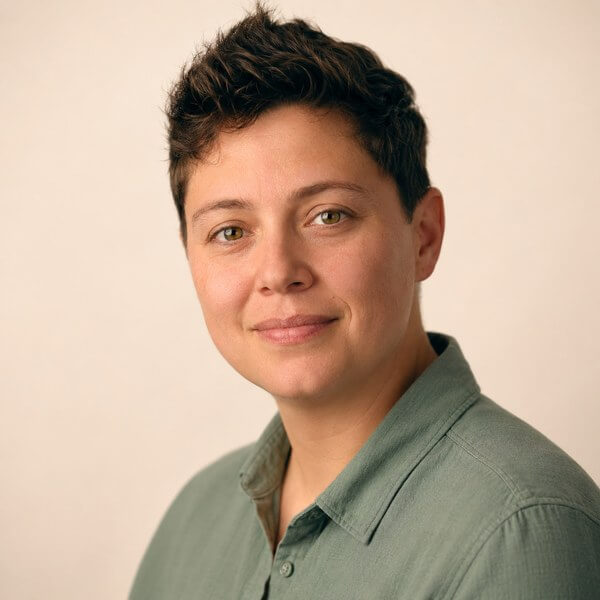
Jordan Whitfield
M.Ed., BCBA
Jordan’s work focuses on the part of the lifespan that often
gets the least attention: adolescents preparing for adulthood and
adults diagnosed later in life…
Jordan has worked in autism services since 2013 and became a
BCBA in 2020 after earning a master’s in special education.
Their work focuses on the part of the lifespan that often gets
the least attention: adolescents preparing for adulthood and
adults, including many diagnosed later in life. Jordan, who is
autistic, brings both lived experience and clinical training to
conversations about identity, masking, burnout, executive
function, and self-advocacy. They’ve supported young adults
through college transitions, first jobs, and independent living,
and are a strong proponent of assent-based, neurodiversity-
affirming care. Outside of work, Jordan plays bass in a local
band and is slowly restoring a 1970s camper.