

ABA Therapy
Receiving an autism spectrum diagnosis for your young child brings up many questions. One of the first and most significant decisions you’ll face is choosing the best educational and therapeutic path. Should you enroll your child in a preschool program or start ABA therapy? This choice can feel overwhelming. This guide is here to help you understand the differences between aba therapy vs preschool setting, so you can make an informed and confident decision that best supports your child’s development.
Understanding ABA Therapy and Preschool Options
When considering the best path for your child, it’s helpful to have a clear picture of what each option entails. Applied Behavior Analysis (ABA) therapy is a highly structured treatment, while a preschool setting offers a more traditional group learning experience.
Each environment has distinct goals and methods. Understanding these differences is the first step in determining which option, or combination of options, will best suit your child’s needs and help them thrive in their school environment and beyond. Let’s look at what you can expect from both ABA therapy and a typical preschool.
Defining ABA Therapy for Young Children
Applied Behavior Analysis (ABA) therapy is a widely recognized and research-backed treatment for individuals on the autism spectrum. At its core, ABA is a scientific approach to understanding and improving behavior. It focuses on teaching essential skills and reducing challenging behaviors by breaking them down into small, manageable steps.
A key technique used in ABA is positive reinforcement. When your child demonstrates a desired behavior, they receive a reward, which encourages them to repeat that action. This method is used to promote skill acquisition in areas like communication, social skills, and daily living tasks. The therapy is typically conducted one-on-one with a trained therapist for several sessions each week.
The primary goal of ABA therapy is to help your child function more independently and participate effectively in everyday life. Through consistent, data-driven behavior analysis, ABA has proven effective in improving communication and social interactions for children with autism and other developmental conditions.
What to Expect From a Typical Preschool Program
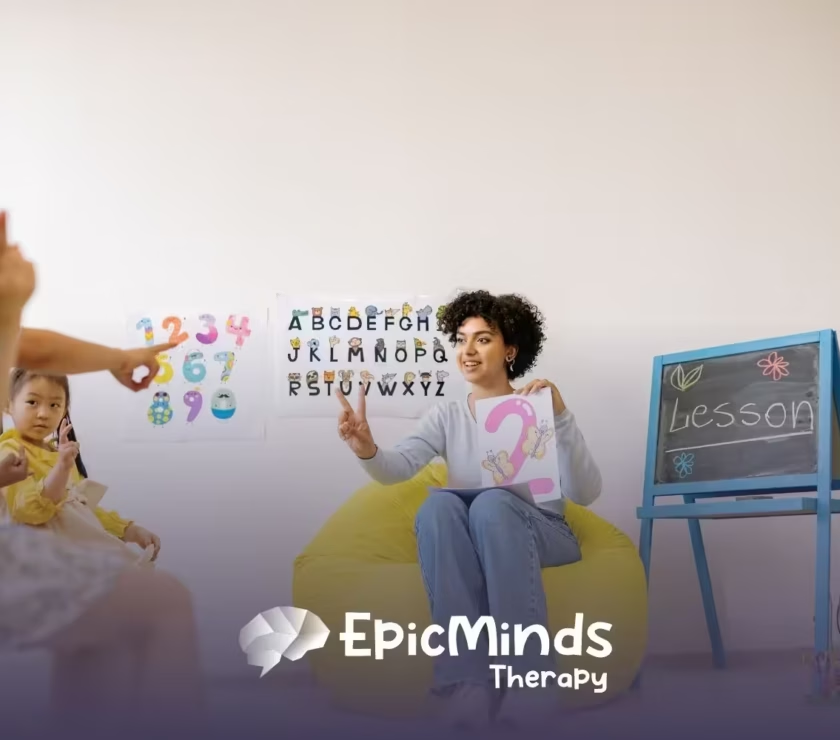
A typical preschool program is designed to prepare young children for a traditional school environment. The focus is on learning through play, social interaction, and structured group activities. In a preschool classroom setting, your child will be part of a group of peers, learning to share, take turns, and follow instructions from a teacher.
The curriculum in a preschool program is generally standardized, covering a range of subjects to promote academic and social growth. Daily routines often include circle time, arts and crafts, outdoor play, and storytime. These activities are designed to build foundational academic skills and encourage social development in a group setting.
While many preschools are inclusive and may offer support for children with special needs, the level of individualized attention is often less than what you would find in a therapeutic setting. The larger class sizes and standardized curriculum might not be as adaptable to the specific needs of every child, especially those who require more targeted support.
Comparing Goals: ABA Therapy vs Preschool
The goals of ABA therapy and a preschool setting, while both aimed at helping your child grow, have different primary focuses. ABA therapy targets specific behavioral and developmental skills with a highly individualized plan. In contrast, preschool aims to prepare all children for a traditional school environment through a group-based curriculum.
Understanding these differing objectives is key to your decision. One approach emphasizes intensive, one-on-one intervention, while the other prioritizes socialization and academic readiness in a group. Let’s explore how they compare in developing social skills and preparing your child for academic learning.
Social Skills and Behavioral Development
Developing social skills and managing behavior are critical for success in a school environment. ABA therapy directly addresses these areas through structured, one-on-one sessions. Using the principles of applied behavior analysis, therapists can teach foundational social skills, such as making eye contact, taking turns, and understanding social cues. ABA also focuses on reducing challenging behaviors that might interfere with learning in a group setting.
In a preschool, social learning happens more organically. Children learn by observing and interacting with their peers. While this is valuable, a child with autism might struggle to navigate these social situations without direct support. Preschools may offer social skills groups, but they are often less intensive than ABA.
Yes, ABA therapy and preschool can absolutely work together for your child. An integrated approach often provides the best of both worlds.
- ABA can teach foundational skills that make the preschool experience more successful.
- Preschool provides a real-world group setting to practice skills learned in therapy.
- Collaboration between therapists and teachers ensures consistency for your child.
Academic Readiness and Learning Approaches
When it comes to academic readiness, ABA therapy and preschool take different routes. ABA therapy builds the foundational skills necessary for learning. This includes teaching a child to sit for activities, follow instructions, and communicate their needs, all of which are prerequisite skills for a classroom. The individualized approach allows the therapist to focus on any specific deficits that might hinder learning.
A preschool’s learning environment is designed to deliver a broad curriculum to a group of children. The focus is on introducing academic concepts like letters, numbers, and colors. While teachers use various methods to engage students, the approach is less tailored than in ABA. A child must often have certain foundational skills already in place to benefit fully from this group instruction.
Here is a comparison of their learning approaches:
| Feature | ABA Therapy | Preschool Program |
| Approach | Highly individualized, one-on-one instruction | Group-based learning with a standardized curriculum |
| Focus | Building foundational skills for learning (e.g., attention, communication) | Introducing broad academic concepts and promoting social learning |
| Pace | Paced to the child’s individual progress | Follows a set schedule for the entire class |
| Support | Intensive, targeted support from a certified behavior analyst | General support from a teacher, with aides possible but not guaranteed |
How ABA Therapy Supports Children With Autism
ABA therapy is a powerful tool specifically designed to support children with autism spectrum disorder. It moves beyond a one-size-fits-all model by providing individualized intervention tailored to your child’s unique strengths and challenges. This personalized plan addresses the core deficits often associated with autism.
For children with special needs, this focused attention is critical. ABA helps build essential skills that may not be directly targeted in a traditional classroom, creating a strong foundation for future learning and independence. Let’s look at how this individualized support works in practice.
Individualized Intervention and Progress Tracking
One of the cornerstones of a quality ABA program is individualized intervention. After an initial assessment, a Board Certified Behavior Analyst (BCBA) designs a treatment plan that directly targets your child’s specific needs. This plan outlines clear goals for skill acquisition and behavior reduction, ensuring that therapy time is used effectively.
A key part of the process is meticulous data collection. Therapists constantly track your child’s progress on each goal. This data-driven approach allows the BCBA to see what’s working and what isn’t, making adjustments to the program as needed. This ensures the intervention remains effective and responsive to your child’s evolving abilities.
Many parents wonder what age is best to start ABA therapy or preschool. Research consistently shows that early intervention is crucial. The brain is most adaptable during a child’s early years, making it the optimal time to address developmental challenges. Starting ABA therapy as soon as possible after a diagnosis can lead to significant and lasting improvements.
Parent Involvement and Home-Based Strategies
ABA therapy is not just for your child; it actively involves you and other family members. Parent training is a fundamental component of most ABA programs. Therapists provide you with the tools and techniques to implement ABA principles at home, creating a consistent environment for your child’s learning and development.
This collaborative approach empowers you to become an active participant in your child’s progress. By using home-based strategies, you can reinforce the skills your child learns in therapy during daily routines. This continuity between therapy and home life accelerates progress and helps generalize skills to different settings.
Incorporating ABA principles into your family life can include:
- Using positive reinforcement to encourage desired behaviors.
- Breaking down daily living tasks into manageable steps.
- Creating structured routines to provide predictability.
- Working with your special education team to align goals.
Deciding Which Is Right for Your Child
Making the right choice between ABA therapy and preschool ultimately comes down to your child’s specific needs and your family situation. There is no single answer that fits everyone. The best path is the one that provides the appropriate level of support for your child’s unique needs while also fitting into your family’s daily life.
To make this important decision, you’ll need to carefully evaluate your child’s current abilities and consider what environment they would thrive in. Asking targeted questions and reflecting on your family’s circumstances will guide you toward the best choice.
Questions to Ask When Choosing ABA or Preschool
As you weigh your options, gathering information is essential. When exploring a preschool setting, you’ll want to understand the level of support available. Not all preschools are equipped to provide the individualized attention some children with autism require.
Similarly, when considering an ABA program, it’s important to understand its structure and goals. A good program will have a clear plan for teaching the skills necessary for a child to eventually succeed in a school environment. The goal of ABA is often to prepare a child for less restrictive settings like a traditional classroom.
Here are some questions to guide your decision-making process:
- What special education programs or support staff does the preschool offer?
- Does my child need intensive one-on-one support to learn, or can they learn in a group?
- Does my child have significant challenging behaviors that could be dangerous or disruptive in a classroom?
- What does the school structure look like, and can it accommodate my child’s sensory needs?
- Can the ABA program incorporate social skills training with peers?
Considering Your Child’s Needs and Family Situation
The best choice for your child is one that honors their individual needs. A child who requires intensive support with communication and has significant challenging behaviors may benefit most from starting with a full-time ABA program. This allows them to build foundational skills at their own pace in a supportive environment.
On the other hand, if your child has stronger foundational skills and primarily needs to work on social interaction, a supportive preschool might be a great fit. Evaluating your child’s readiness is key. To know if your autistic child is ready for preschool, consider if they can follow simple instructions, communicate basic needs, and manage in a group for short periods.
Your family situation also plays a role. Think about your daily schedule, what your insurance covers, and the resources available in your area. The best choice is one that is sustainable for your entire family and provides your child with the right support to improve their daily living skills and overall well-being.
Conclusion
In conclusion, choosing between ABA therapy and preschool for your autistic child is a significant decision that requires careful consideration of your child’s unique needs and family circumstances. Both options offer distinct advantages: ABA therapy provides tailored interventions that focus on individual development, while preschool programs foster social interactions and academic readiness in a structured environment. It’s essential to evaluate your child’s specific goals and what might work best for them. Remember, there’s no one-size-fits-all approach, and you can explore ways to combine both options for optimal support.
At Epics Mind Therapy, we help families make confident decisions about their child’s early learning path. Serving North Carolina, our team works closely with parents to compare ABA therapy and preschool options based on individual goals, developmental needs, and long-term outcomes. Through personalized assessments and clear guidance, we ensure families understand how structured ABA support can complement or lead early education plans. Contact Epics Mind Therapy today to explore the best option for your child’s growth and future success.
Frequently Asked Questions
Can ABA therapy and preschool work together for my child?
Yes, they can work together effectively. ABA therapy can provide individualized attention to build foundational skills, while the preschool setting offers a natural school environment for social interaction and practicing those skills. This combined approach can offer comprehensive support for your child’s development, preparing them for future academic success.
What age is best to start ABA therapy or preschool?
Early intervention is key for your child’s future. It is generally recommended to start ABA therapy as soon as a child receives a diagnosis, as the early years are critical for skill acquisition. A preschool program can be introduced once the child has developed the prerequisite skills needed to benefit from a group setting.
How do I know if my autistic child is ready for preschool?
School readiness for a child on the autism spectrum depends on certain prerequisite skills. Consider if your child can follow basic instructions, communicate their needs, and tolerate a group classroom setting for short periods. Discussing your child’s readiness with therapists and potential school staff can help you make an informed decision.
Sources
- https://www.behavior-analysis.org/
- https://www.simplypsychology.org/positive-reinforcement.html
- https://pmc.ncbi.nlm.nih.gov/articles/PMC11408984/
- https://pmc.ncbi.nlm.nih.gov/articles/PMC3856866/
- https://my.clevelandclinic.org/health/articles/board-certified-behavior-analyst-bcba
- https://pmc.ncbi.nlm.nih.gov/articles/PMC9857540/