



ABA Therapy
Learning a new skill often begins with help. A therapist might guide a child’s hand, give a verbal cue, or model the correct behavior. Over time, that help is gradually reduced. This process is known as fading. Fading ABA therapy examples demonstrate how prompts are systematically reduced so that a learner can perform a behavior independently. Prompt fading is a core principle in Applied Behavior Analysis and is widely used to teach communication, social skills, and daily living routines.
This article explains fading in ABA therapy and provides clear fading ABA therapy examples supported by research.
What Is Prompt Fading in ABA?
Prompt fading refers to the gradual removal of assistance used to teach a new skill. The goal is independent responding.
Prompts may include:
- Physical prompts
- Gestural prompts
- Verbal prompts
- Visual prompts
- Modeling
When prompts remain too long, prompt dependency can occur. Prompt fading prevents this by reducing support step by step. Understanding fading begins with recognizing how prompts guide learning.
Why Fading Is Important in ABA Therapy
Prompt fading ensures that skills transfer from therapist support to independent performance.
Research shows that systematic fading improves skill acquisition and generalization. These findings support the use of fading ABA therapy examples in structured teaching programs.
Fading ABA Therapy Examples in Communication Skills
One common area for fading ABA therapy examples is communication training.
Example sequence:
- Therapist physically prompts a child to point to a picture to request a snack.
- Physical prompt fades to a gestural prompt.
- Gestural prompt fades to a verbal cue such as “What do you want?”
- Verbal prompt fades completely.
The child eventually requests independently. This process is often used in Picture Exchange Communication System (PECS) training.
Fading ABA Therapy Examples in Daily Living Skills
Daily living routines frequently use prompt fading.
Example: brushing teeth.
Steps may include:
- Full physical guidance at first
- Partial physical guidance
- Gestural pointing to the toothbrush
- Verbal reminder
- Independent completion
These fading ABA therapy examples show how a multi-step routine becomes independent over time.
Fading ABA Therapy Examples in Academic Skills
Prompt fading is also used in academic instruction.
Example: learning letter identification.
Step progression:
- Therapist points to the correct letter.
- Therapist gives a verbal hint.
- Therapist delays prompts to allow response.
- Child identifies the letter independently.
These structured fading ABA therapy examples support skill mastery without reliance on cues.
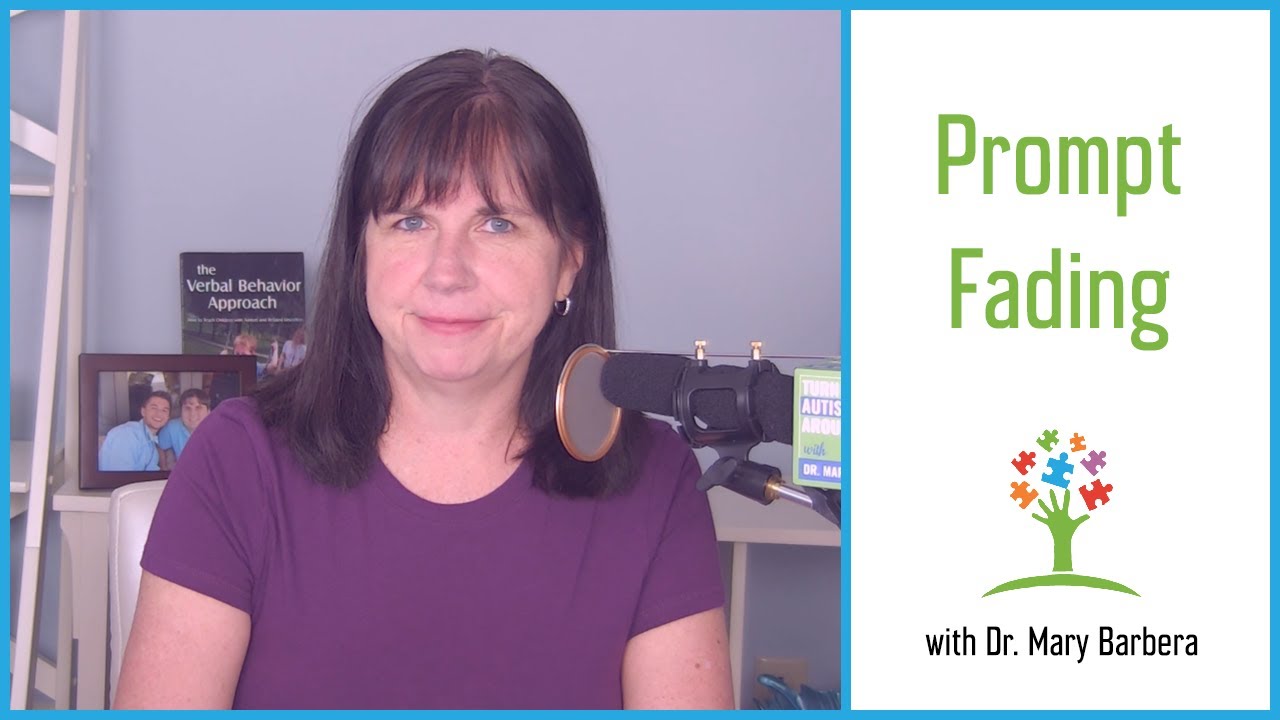
Types of Prompt Fading Used in ABA
Different fading methods are used depending on the learner.
Most-to-Least Prompting
The therapist starts with strong assistance and gradually reduces it.
Least-to-Most Prompting
The learner attempts independently before receiving help.
Time Delay Fading
A pause is introduced between instruction and prompt.
Each approach appears in different fading ABA therapy examples depending on skill complexity.
Case Study: Prompt Fading for Social Greetings
A child rarely greeted peers spontaneously.
Intervention included:
- Modeling a greeting
- Gestural prompt to wave
- Verbal prompt “Say hi”
- Gradual removal of prompts
Data showed increased spontaneous greetings after prompts were faded. Studies show prompt fading improves social initiations. This example illustrates practical fading ABA therapy examples in social skill development.
Data Collection During Prompt Fading
ABA therapy relies on measurable outcomes.
During prompt fading, therapists record:
- Prompt level required
- Frequency of independent responses
- Accuracy of responses
- Generalization across environments
These measurements guide decisions about when prompts should be reduced.Data-driven evaluation ensures fading occurs systematically.
Avoiding Prompt Dependency
Prompt dependency occurs when a learner waits for a prompt before responding.
Prompt fading helps prevent this by:
- Reinforcing independent attempts
- Gradually reducing assistance
- •ntroducing time delays
- Practicing skills in new environments
Research shows systematic fading reduces dependency and increases independence.
Fading ABA Therapy Examples Across Settings
Prompt fading occurs in many environments.
Examples include:
- Home routines
- School classroom activities
- Community behavior training
- Social interaction practice
Practicing skills across settings supports generalization. These real-world applications demonstrate practical fading ABA therapy examples beyond therapy sessions.
When Fading Should Be Adjusted
Prompt fading is not always linear.
Therapists may pause fading if:
- Accuracy decreases
- Frustration increases
- Skill complexity rises
Adjustments maintain learning success. Behavior analysts monitor data closely to determine appropriate fading pace.
Conclusion
Prompt fading is a core teaching strategy in ABA therapy. It allows learners to move from assisted responses to independent skills. Research supports prompt fading as an effective method for teaching communication, social interaction, academic tasks, and daily living routines.
The fading ABA therapy examples discussed in this article show how structured prompt reduction helps learners gain independence over time.
At Epic Minds Therapy, our clinicians use evidence-based strategies such as prompt fading to support meaningful skill development. If your child is learning new communication, social, or daily living skills, schedule an assessment with Epic Minds Therapy to explore how individualized ABA programs can guide that progress.
Contact Epic Minds Therapy today to begin a structured evaluation and build a personalized skill-development plan.
FAQs
What is prompt fading in ABA therapy?
Prompt fading is the gradual reduction of assistance used to teach a behavior.
Why is fading important in ABA therapy?
It helps learners perform skills independently without relying on prompts.
What are common prompt types used before fading?
Physical, verbal, gestural, visual, and modeling prompts.
Can prompt fading be used for social skills?
Yes. Prompt fading is commonly used to teach greetings, conversation skills, and peer interaction.
How do therapists know when to fade prompts?
They analyze performance data and reduce prompts when accuracy increases.
Sources
- https://www.appliedbehavioranalysisedu.org/what-is-prompting-and-how-is-it-used-in-aba-therapy/
- https://www.behavior-analysis.org/
- https://pmc.ncbi.nlm.nih.gov/articles/PMC4383256/
- https://marybarbera.com/physical-prompting-for-autism-children-aba-ethics/
- https://onlinelibrary.wiley.com/doi/10.1901/jaba.2001.34-85
- https://nationalautismresources.com/the-picture-exchange-communication-system-pecs/