



ABA Therapy
Quick answer: How to make an ABA session fun? Make “fun” part of the teaching plan. ABA teams do this by pairing the therapist with preferred activities, keeping early demands low, using short goals, and reinforcing success fast. Pairing is a documented ABA practice used to build rapport and increase willingness to participate.
Start with pairing, not demands
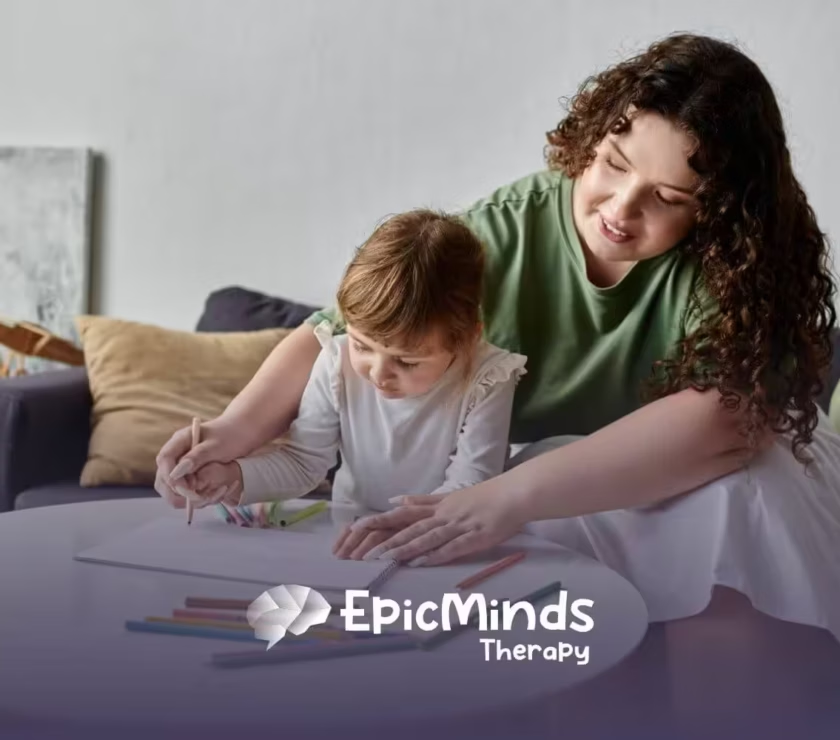
How to make an ABA session fun? Begin with 5–15 minutes where the therapist follows the child’s lead. This often means play, movement, and access to preferred items in the absence of instructions. Studies on presession pairing show it can increase preference for the therapy setting and support engagement.
Use a fast reinforcement loop
How to make an ABA session fun? Keep goals small and deliver reinforcement right after the target behavior. Reinforcement can be a toy, a short game, a snack, or attention, as long as it increases the chance the skill happens again.
Teach in real play and real routines

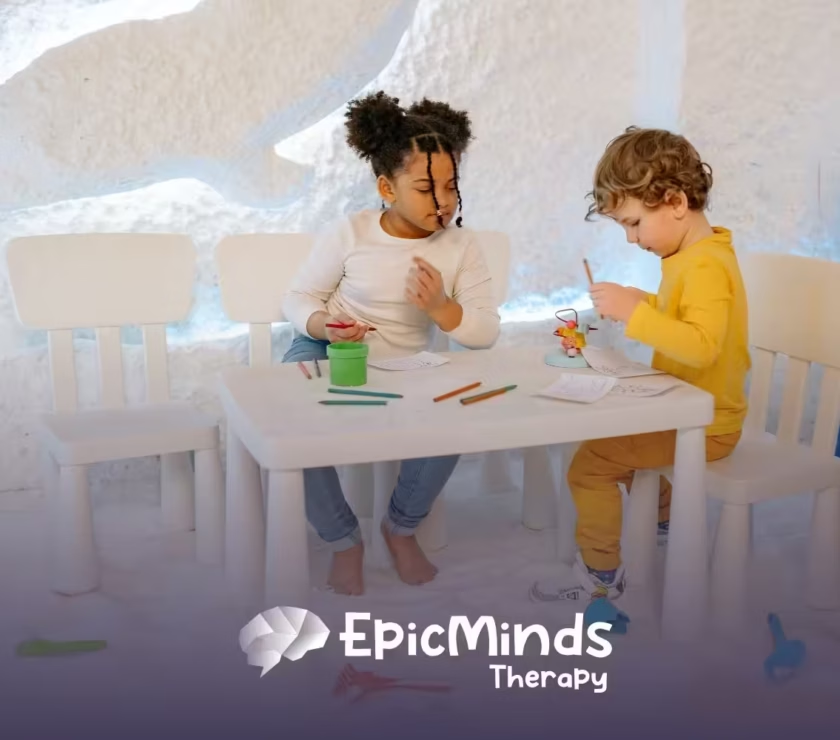
A lot of “fun” comes from Natural Environment Teaching. That means teaching skills inside play, snacks, and daily routines instead of only at a table. It also supports generalization across settings.
Offer choice and watch assent
Fun drops fast when a child feels trapped. Ethical ABA requires informed consent and also requires obtaining assent from clients when applicable. In practice, teams use choices and breaks, and they adjust when a child shows “no” through behavior.
A simple example families can copy
At Epic Minds Therapy, a common “fun first” routine looks like this: first a 10-second instruction, then a 20-second preferred activity. The ratio changes as tolerance grows, and data track engagement, prompts, and problem behavior.
How to make an ABA session fun? Pair first, teach in short loops, use play-based routines, and respect assent. Want a session plan built around your child’s interests and goals? Call Epic Minds Therapy to schedule a visit.
FAQs
Is “fun” actually part of ABA?
Yes. Pairing and reinforcement are standard ABA tools used to build engagement.
How long should pairing last?
Many programs start with several minutes of low-demand pairing, then add brief teaching.
What if my child refuses?
Teams adjust demands, increase pairing, and use choices and breaks. Assent is part of ethical practice.
Does play-based teaching still count as ABA?
Yes. Natural Environment Teaching is an ABA approach that teaches skills in everyday contexts.
Sources
- https://pmc.ncbi.nlm.nih.gov/articles/PMC6411560/
- https://pmc.ncbi.nlm.nih.gov/articles/PMC7942779/
- https://www.autismspeaks.org/applied-behavior-analysis
- https://www.nu.edu/blog/what-is-natural-environment-teaching/
- https://www.bacb.com/wp-content/uploads/2022/01/Ethics-Code-for-Behavior-Analysts-240830-a.pdf