




ABA Therapy

Why Parent Training Is a Core Part of ABA, in plain terms: ABA works because the people in a child’s life every day — not just the BCBA — learn how to support skills and respond to behaviour consistently. Insurance plans require it, the BACB Ethics Code reinforces it, and the strongest research evidence on long-term outcomes points to parent involvement as the single biggest predictor of generalisation. You are not being asked to become a therapist. You are being asked to learn a handful of evidence-based responses so the gains your child makes in session continue at the breakfast table, in the car, and at bedtime.
What to expect:
- Time: Typically 1 × 60 minutes per week for the first 12 weeks, then tapered
- Format: Behavioural Skills Training — instruction, modelling, rehearsal, feedback
- Run by: Your child’s BCBA, billed under CPT 97156
- You will learn: prompting, reinforcement, antecedent strategies, data collection
- You will not be graded, judged, or expected to be a clinician
The rest of this guide walks through what good parent training looks like, the time commitment honestly, and how to spot a clinic that does it well.
What Parents Are Usually Afraid to Ask
Three fears come up in almost every initial conversation:
- “I’m already exhausted. Can I do this?”
- “Will I be judged for what I haven’t been doing?”
- “Is this just going to be more homework for me?”
All three are answered honestly in this guide. The short version: parent training is designed with exhaustion in mind, judgement is a red flag for poor practice, and the homework is small, specific, and chosen by you. None of this changes the fact that Why Parent Training Is a Core Part of ABA is, in the end, a question with a clear answer — the rest of this article walks you through it.
Why Parent Training Is a Core Part of ABA: The Three Reasons
Three forces make caregiver training non-optional in good ABA practice.
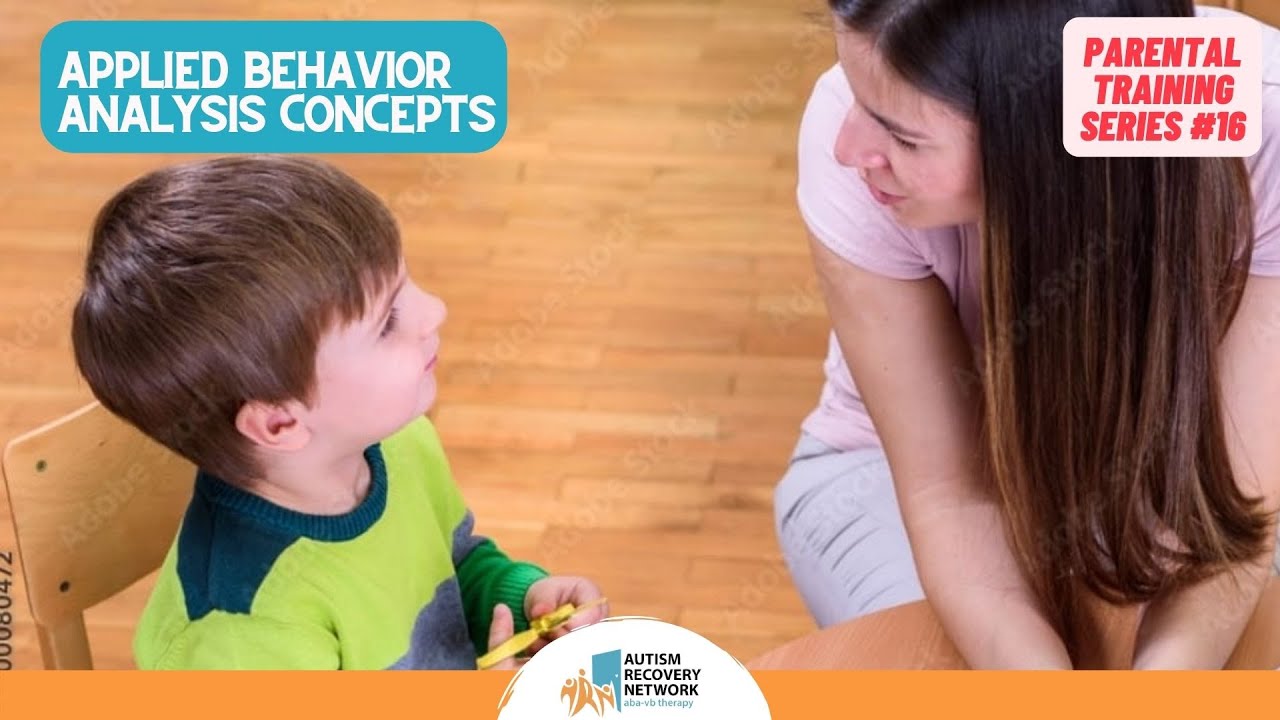
1. Insurance Plans Require It
In the US, most insurance plans (TRICARE, Blue Cross Blue Shield, Aetna, Cigna, United Healthcare, state Medicaid programmes) require parent training documentation as part of medical necessity for ABA. TRICARE’s Autism Care Demonstration requires at least 6 caregiver guidance sessions every 6 months. Without it, claims can be denied at audit. The relevant billing code is CPT 97156 (“Family Adaptive Behavior Treatment Guidance“), the code your BCBA uses for direct parent training sessions.
2. The BACB Ethics Code Requires It
The BACB Ethics Code for Behavior Analysts (2022, updated 2024), section 2.16 (Describing Behavior-Change Interventions Before Implementation), requires behaviour analysts to describe the objectives, procedures, timelines, and review schedule of any behaviour-change intervention to stakeholders — which explicitly includes parents and caregivers. Section 3.01 (Responsibility to Clients) further requires that practitioners work in the best interests of the client and document caregiver involvement, including barriers.
3. The Research Evidence Is Strong
The landmark study on this topic is Bearss et al. (2015), published in JAMA: a multi-site randomised controlled trial of 180 children with autism aged 3–7. Children whose parents received structured ABA-based parent training showed significantly greater reductions in disruptive behaviour than children whose parents received parent education only. The benefits endured at least six months after the intervention ended.
A 2017 systematic review and meta-analysis (Postorino et al.) confirmed these findings across studies. More recent research (PMC, 2025) has documented that parent-led ABA can be as effective as practitioner-led ABA for skill acquisition, with the added benefit of reducing parental stress.
This is the heart of Why Parent Training Is a Core Part of ABA: the evidence is unambiguous that gains generalise farther and last longer when the people around the child learn the strategies too.
What Parent Training Actually Looks Like (In Practice)
Here is the typical structure for a parent training session at most clinics, including ours.
Session Format (60 minutes)
| Minutes | Activity |
| 0–5 | Check-in: how was the week, what worked, what didn’t |
| 5–15 | Review of last week’s home practice and any data |
| 15–30 | Instruction on a new strategy (with examples) |
| 30–45 | Modelling and role-play with the BCBA |
| 45–55 | You practice; BCBA gives feedback |
| 55–60 | Plan the home practice for the coming week |
This is Behavioural Skills Training (BST) — instruction, modelling, rehearsal, feedback — the standard parent training methodology backed by decades of research.
Frequency
- First 12 weeks: Once a week, 60 minutes
- Months 4–6: Every 2 weeks, 60 minutes
- Maintenance: Once a month or as needed
Who Runs It
Your child’s BCBA. Not an RBT. Not “a parent coach.” A Board Certified Behavior Analyst who oversees the entire programme. Most insurance plans require this.
“But I’m Already Exhausted” — The Honest Time Commitment
Here is what good parent training will actually cost you in time, in real numbers.
- 1 × 60 minute session per week for 12 weeks — most can be done by video
- 5–10 minutes of “home practice” per day — usually built into something you already do (mealtime, bath time, school pickup)
- No paperwork mountain. Modern data collection is usually a quick phone tally or a short tick-sheet your BCBA designs around your week.
A common worry: “I can barely keep up now.” That is precisely why parent training is structured the way it is. The goal is not to add to your load — it is to make the load smaller by giving you specific responses that reduce the daily fires.
📥 Free PDF: What to Expect in Your First Parent Training Session — a 4-page guide covering everything from session structure to what to bring, what your BCBA will ask, and how to know it’s a good fit. Get the free guide (email opt-in).
What You Will Actually Learn
Parent training is not generic “parenting tips.” It is four to six specific, evidence-based skill areas, delivered one at a time, in the order that matters most for your child.
Prompting
How to give your child the smallest amount of support needed to succeed at a task — and how to fade that support so independence grows. Example: prompting hierarchies for getting dressed.
Reinforcement
How to identify what truly motivates your child (often not what motivates other children), and how to deliver reinforcement with timing and consistency that actually changes behaviour. Example: catching desired behaviour quickly and labelling it specifically.
Antecedent Strategies
How to change the environment before a difficult moment — visual schedules, transition warnings, choice menus, sensory accommodations — so meltdowns become rarer rather than something you only manage after the fact.
Data Collection (Light Touch)
A simple, sustainable way of noticing patterns: when does behaviour spike? After lunch? Before school? With one parent more than another? Small data, big insight.
Some clinics also cover communication strategies (gestural, verbal, AAC-supported), task analysis (breaking complex tasks into steps), and de-escalation in the moment.
“Will I Be Judged?” — What Good Parent Training Feels Like
Good parent training feels like working alongside a teammate who has seen this before and is not surprised by anything you tell them. Specifically, here is what to expect — and what to flag.
Green Flags ✅
- Your BCBA asks more questions than they answer in the first 1–2 sessions
- They ask about your goals as a family, not only the clinic’s goals for your child
- Cultural and family-routine differences are respected and incorporated
- Strategies are demonstrated, you practise, you get specific feedback
- “Homework” is small, optional, and chosen with you
- You’re allowed to disagree without it derailing the relationship
Red Flags ❌
- Lectures rather than coaching
- Generic advice not tailored to your child or your home
- Talking at you rather than practising with you
- Heavy use of jargon without translation
- Telling you what you “must” do rather than offering options
- Disregard for sibling, work, cultural, or single-parent realities
- No data review and no tapering plan
The Bearss research (and the BACB Ethics Code section on stakeholder collaboration) both emphasise that parent training must be collaborative, not didactic. If it doesn’t feel like a partnership, that’s worth a conversation with the clinical director.
What Changes at Home: Month 1, 3, and 6
A realistic timeline drawn from clinical practice and the Bearss 24-week RUBI dataset.
Month 1
- You will notice the patterns more than the wins. That’s expected.
- You will have one or two concrete strategies you use daily.
- Often the biggest first-month win is not arguing with yourself about how to respond.
Month 3
- Specific target behaviours measurably reduce (per Bearss et al., disruptive behaviour ratings drop meaningfully by week 12).
- Your child shows more of the replacement behaviour you’ve been reinforcing.
- You feel less reactive and more proactive — the antecedent work pays off.
Month 6
- Generalisation appears: your child uses skills in places no one trained them in.
- Sibling, partner, and grandparent responses start to align.
- Many families step down to fortnightly or monthly maintenance sessions.
When Parent Training Is — and Isn’t — Appropriate
Parent training is the standard expectation in modern ABA, but it adapts to family structure.
Single Parents
Parent training works with a single primary caregiver. Sessions are scheduled around your reality (evening, video, weekend). The BCBA may also coordinate with childcare, school, or grandparent caregivers separately.
Separated or Co-Parenting Families
Most clinics offer parallel sessions across two households so both parents are using the same strategies. This is often the difference between progress and stalling.
Grandparents as Primary Caregivers
Grandparents can complete parent training in exactly the same format. Many clinics report that grandparent-caregivers are among the most consistent participants.
Foster and Kinship Families
Trauma-informed adaptations are standard. Training may include attachment-aware components alongside ABA skills.
When Parent Training May Be Paused or Adapted
- Acute parental mental health crises — pause and signpost to support first
- Domestic violence in the home — clinician follows safeguarding protocol
- Severe family scheduling barriers — clinic offers asynchronous/video options
- Parent declines training — the BACB Ethics Code requires documentation and discussion of how this affects expected outcomes
How to Find a BCBA Who Is Good at Parent Training
The BCBA who runs intake is not always the BCBA who will run your parent training. Ask the interview questions below before you sign.
- “Who will run our parent training sessions, and what is their background?”
- “What model do you use — Behavioural Skills Training, RUBI, something else?”
- “How many parent training hours per month are included in our authorisation?”
- “Will sessions be held in clinic, at home, or by video — and is that flexible?”
- “How do you handle cultural or family-routine differences in your coaching?”
- “What happens if we disagree with a recommended strategy?”
- “Can I see a sample agenda or curriculum for the first 12 weeks?”
- “How do you taper parent training — and when?”
A BCBA who answers these confidently, without defensiveness, is usually one who has done this well, often.
Want a No-Cost Conversation About Your Family’s Fit?
If you are mid-evaluation and weighing whether parent training is going to work for your week, life, and family structure, that is a 20-minute conversation we are happy to have. No paperwork, no commitment.
Book a Free 20-Minute Family Fit Call
(One of our BCBAs will walk through your child’s current goals, your real schedule, and what parent training would actually look like in your week.)
Related Reading
Why Parent Training Is a Core Part of ABA connects to several other topics families care about:
- Calming and regulation tools parents learn during training: Top 15 Calming Tools for Autism.
- Strengths-and-support framework many clinicians use in goal-setting: Autistic Wheel.
- Specific behaviours parents commonly ask about in early sessions: Is Side-Glancing Always Autism?
- The long-horizon picture that informs early goal selection: Best Jobs for Autistic Adults.
Conclusion: The Quiet Truth About ABA Outcomes
Why Parent Training Is a Core Part of ABA can be answered with one sentence: because the data, the ethics code, and your insurer all agree that what happens in the 165 hours your child is not in session matters more than what happens in the 5 hours they are.
If you’ve read this far, you are not avoiding parent training — you are vetting it. That is exactly the right instinct. The best outcomes happen with families who chose their clinician deliberately, asked hard questions, and treated parent training as the active ingredient it is.
Take the next concrete step. Book a 30-minute Parent Training Readiness Review with one of our BCBAs. We’ll look at your child’s current programme (or proposed programme), walk through what the first 12 weeks of parent training would actually look like for your schedule, and give you a written summary you can use either with us or with another provider.
Book your Parent Training Readiness Review — currently available within 7 working days.
Frequently Asked Questions
Q: Is parent training in ABA legally required?
A: In the US, the BACB Ethics Code requires behaviour analysts to involve and inform caregivers about interventions. Most insurance plans require documented parent training as part of medical-necessity criteria. It is not “legally required” in the same way as a school attendance law, but practically it is required by every major payer and ethics-bound provider.
Q: How long is each parent training session?
A: The standard session is 60 minutes, though some clinics offer 30- or 45-minute formats. Length is usually driven by what your insurance authorises and what your family schedule supports.
Q: Can I do parent training online?
A: Yes. CPT 97156 is reimbursable via telehealth across most US insurance plans. Telehealth parent training has been shown in studies (Lindgren et al., 2016) to be as effective as in-person for many outcomes.
Q: What if my partner won’t attend?
A: That happens often. Most clinics will still proceed with the participating parent. The BCBA can also produce a written summary of each session to share with the absent partner. Outcomes are best when both parents attend, but real progress is still very achievable with one.
Sources
- https://www.bacb.com/wp-content/uploads/2022/01/Ethics-Code-for-Behavior-Analysts-240830-a.pdf
- https://pmc.ncbi.nlm.nih.gov/articles/PMC8586097/
- https://www.tricare.mil/autism
- https://www.lawinsider.com/dictionary/family-adaptive-behavior-treatment-guidance
- https://pubmed.ncbi.nlm.nih.gov/25898050/
- https://www.bacb.com/bcba/
- https://www.understood.org/en/articles/the-difference-between-tantrums-and-meltdowns
- https://www.asha.org/njc/aac/
- https://pmc.ncbi.nlm.nih.gov/articles/PMC12714176/
This article is for general information only and is not a substitute for personalised clinical advice. If you are considering ABA for your child, consult a qualified BCBA in your country of residence.