



What Is a Sensory Room?
A sensory room — also called a Multi-Sensory Environment (MSE) or Snoezelen room — is a dedicated space designed to provide controlled, adjustable sensory input through lights, sounds, textures, movement equipment, and tactile materials. Rather than exposing a child to the unpredictable sensory demands of everyday environments, a sensory room offers an intentionally calibrated space where inputs can be modulated to meet each child’s individual regulatory needs.
For autistic children, who commonly experience hypersensitivity or hyposensitivity across sensory channels — sound, light, touch, movement, taste, or smell — sensory rooms serve a specific clinical function: they give the nervous system a controlled environment to regulate, reset, and gradually build tolerance.
In ABA therapy settings, sensory rooms function as safe practice zones where children can work on emotional regulation, attention, and sensory integration while therapists observe and respond to individual responses in real time.
Why Autistic Children Need Sensory Rooms
Many children with autism spectrum disorder experience the ordinary world as sensory noise — school hallways, grocery stores, and cafeterias can be genuinely overwhelming. Research into sensory processing differences in autism documents atypical neural connectivity in sensory pathways, meaning the brain may amplify, dampen, or inconsistently process inputs that neurotypical children filter automatically.
When sensory input overwhelms the nervous system, children show the behavioral signals familiar to every ABA-involved parent: covering ears or eyes, increased stimming, sudden irritability, withdrawal, meltdowns, or shutdown. These behaviors aren’t defiance — they’re a dysregulated nervous system communicating distress.
A sensory room gives the child somewhere to go before that threshold is crossed. It interrupts the overload cycle at the regulation stage rather than the crisis stage.
The Research: What Sensory Rooms Actually Do
The evidence base for sensory rooms in autism support has grown substantially over the past two decades. Here is what the research consistently shows:
Improved attention and sustained focus. In a study of 41 autistic children aged 4 to 12, participants who had control over sensory changes in a multi-sensory environment displayed significantly longer sustained attention during sessions compared to those without that control. Controllable sensory changes in MSEs correlate with reduced repetitive motor behaviors and increased attention.
Reduced anxiety and repetitive behaviors. A systematic review found that controlled sensory room exposure reduces anxiety, improves reflective learning, and boosts overall wellbeing for autistic individuals. Practitioners observe that visual and auditory stimuli, when properly calibrated, can captivate interest and reduce distractibility — and that repeated positive experiences help children associate specific inputs with calm, eventually applying those regulation strategies outside the dedicated space.
Fewer behavioral referrals in schools. Schools with sensory rooms report measurably fewer behavioral referrals and increased participation in academic tasks. The Cardiff University Sensory Room Guide documents this consistently across multiple school settings — reduced classroom disruption and improved task engagement when students have access to regular sensory room time.
Motor skill development. Sensory room activities support gross and fine motor skill development — balance boards, climbing structures, weighted items, and tactile play all build coordination and body awareness that translate into daily living tasks.
Social skill development in group settings. Though typically thought of as individual regulation spaces, sensory rooms also support peer interaction. Group sessions encourage turn-taking, shared equipment exploration, and cooperative play. When therapist-guided, these activities generalize into improved peer engagement in classrooms and community settings.
The Key Benefits of Sensory Rooms for Autism
1. Emotional regulation and meltdown prevention
This is the most immediate and frequently cited benefit. A sensory room gives children a structured way to decompress before sensory load reaches the point of crisis. Over time, children learn to associate specific inputs — weighted blankets, soft lighting, rhythmic movement — with physiological calm. That association becomes a portable skill: they begin to seek and apply similar inputs independently in other environments.
2. Reduced anxiety in daily environments
Regular sensory room time builds the nervous system’s tolerance for sensory variation. Children who frequently practice regulation in a controlled space gradually become more resilient in less controlled environments — school hallways, stores, family gatherings. The room doesn’t just help in the moment; it builds lasting regulatory capacity.
3. Improved focus and learning readiness
A regulated nervous system is a learning nervous system. Children who arrive at ABA sessions or school tasks from a regulated state — having had sensory room access before structured demands — demonstrate better attention, follow more instructions, and engage more fully with learning tasks. This is the mechanism behind the school data: fewer behavioral referrals because children are coming to class ready to learn rather than already at capacity.
4. Motor skill development
Sensory equipment — swings, balance beams, tactile panels, weighted items, climbing structures — builds proprioceptive awareness, gross motor coordination, and fine motor precision. These skills directly support independence in daily living tasks: dressing, writing, navigating physical environments, and self-care routines.
5. Communication and self-advocacy
For children who are nonverbal or minimally verbal, learning to indicate which sensory inputs they prefer — through gestures, picture boards, or AAC devices — is a meaningful communication milestone. Requesting time in the sensory room, selecting specific equipment, or signaling “more” or “stop” are functional communication acts with immediate, motivating consequences. This is one of the reasons sensory rooms integrate naturally with ABA therapy’s functional communication goals.
6. Social participation in structured group settings
When sensory rooms are used for group sessions, they create a low-pressure social environment where children can interact with peers around shared, enjoyable activities. The predictability and comfort of the sensory space reduces the social cognitive load, making peer interaction more accessible than it might be in noisier, less controlled settings.
What goes in a sensory room
Effective sensory rooms cover all five sensory domains. Design around the individual child’s profile — a BCBA or occupational therapist can help assess what each child needs.
How to Create a Sensory Room at Home
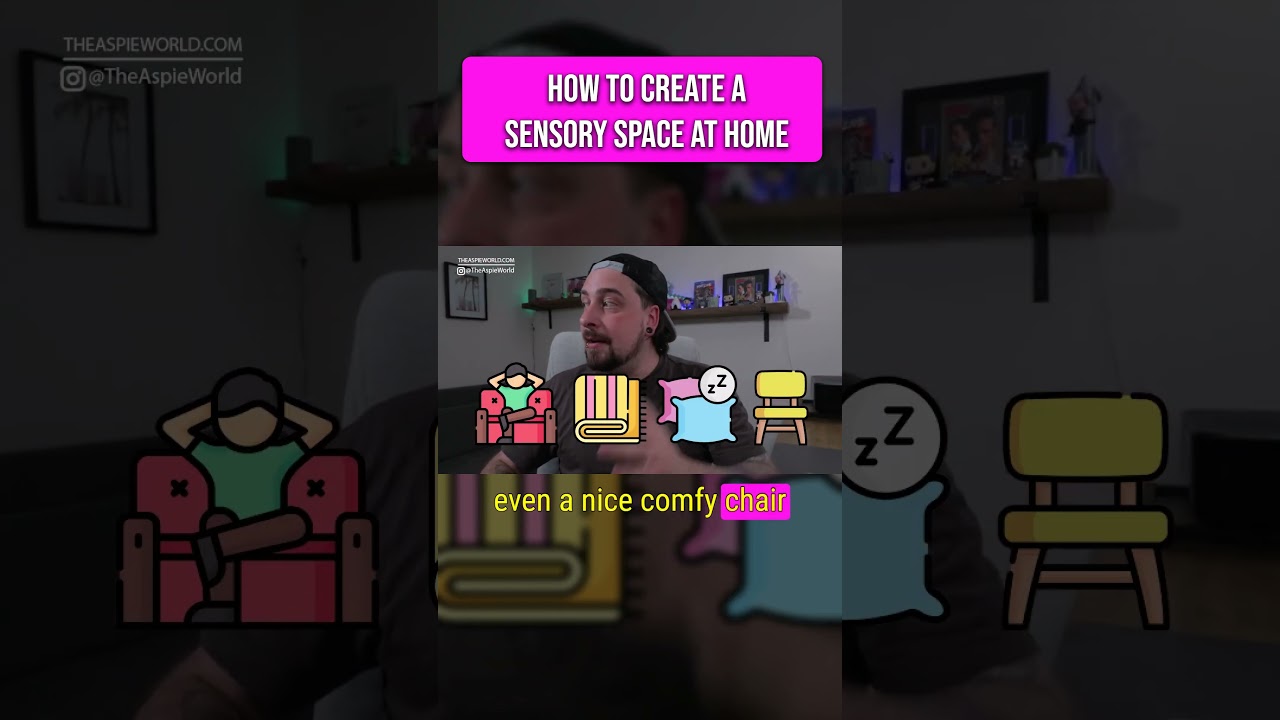
A sensory room doesn’t require a dedicated room or a large budget. Many families create effective sensory spaces in a corner of a bedroom, a section of a basement, or even a large closet. The principles that matter most are consistency (the space is always available and reliably the same), safety (equipment is secured, materials are non-toxic), and personalization (contents reflect the specific child’s preferences and sensory profile).
Low-cost starting points:
- A pop-up tent with soft lighting inside — small, enclosed, and immediately calming for many children
- A weighted blanket and a basket of preferred fidget items in a quiet corner
- A small speaker for white noise or preferred calming music
- A mini trampoline with a handle bar for vestibular input before structured tasks
- Sensory bins for tactile exploration with materials from craft stores
Practical tips:
- Introduce the space gradually if the child is hesitant — pair it with preferred activities first
- Establish clear expectations: the sensory room is for regulation, not escape from all demands
- Keep a visual menu of available equipment so the child can request specific items
- Observe what the child gravitates toward and what they avoid — this is meaningful data about their sensory profile
- Coordinate with the child’s BCBA so home strategies align with what’s used in therapy
Sensory Rooms in Schools: What the Evidence Shows
Schools that have invested in sensory spaces report consistently positive outcomes. The Cardiff University Sensory Room Guide — one of the most comprehensive practitioner resources available — documents reduced anxiety, improved wellbeing, and better academic engagement in autistic students with sensory room access.
The American School for the Deaf found that sensory rooms help students learn to regulate their own behavior in ways that benefit classroom performance, home life, and community participation. For nonverbal students, developing the ability to request sensory access — even through sign — represents meaningful functional communication growth.
Practically, school sensory rooms work best when:
- There is a structured schedule for access rather than only crisis-driven use
- Students are taught proactively how to use the space and its equipment
- Sensory “snacks” — brief regulatory inputs before transitions or demands — are built into the daily routine
- Teachers and support staff are trained in recognizing early warning signs and facilitating access before escalation
How ABA Therapy and Sensory Rooms Work Together
Sensory rooms are not a replacement for ABA therapy — they are a complementary support that makes ABA more effective by improving the regulatory foundation from which learning happens.
In in-home ABA therapy, BCBAs often advise families on creating sensory-friendly spaces that support the skill-building happening in sessions. In school-based ABA, BCBAs may coordinate with school teams to integrate sensory room access into behavior intervention plans. And in parent training, families learn how to use sensory strategies proactively — before demand situations — rather than reactively after challenges occur.
The connection is direct: a child who is regulated is a child who can learn. Sensory rooms build regulation. ABA therapy builds skills. Together, they produce better outcomes than either does in isolation.
Regulation First. Learning Second. That’s How We Build Programs.
At Epic Minds Therapy, we’ve seen what happens when sensory needs get addressed as an afterthought. Sessions stall. Kids disengage. Families burn out trying to push through behavioral challenges that were really regulatory ones in disguise.
Our BCBAs start with the sensory profile — not because it’s a box to check, but because a child who can’t regulate can’t learn. Every ABA program we build factors in how a child receives and processes the world: what they’re drawn to, what overwhelms them, and what helps them reset. That foundation shapes everything from session structure to home recommendations to how we coordinate with school teams.
North Carolina families from the Outer Banks to the Appalachian foothills have trusted us with this work — in Charlotte, Raleigh, Fayetteville, Greensboro, Durham, Greenville, Asheville, Winston-Salem, and communities across the state.
Most major insurance plans cover ABA — and we verify your coverage before you commit to anything. When you’re ready to talk, our team is here.
Frequently Asked Questions
What is a sensory room for autism?
A sensory room is a specially designed space with adjustable lighting, sounds, tactile materials, and movement equipment that helps autistic children regulate their sensory input, reduce anxiety, and build emotional regulation skills. They are used in therapy settings, schools, and homes.
Do sensory rooms actually help autistic children?
Yes. Research consistently shows sensory rooms improve attention, reduce anxiety and repetitive behaviors, support motor development, and reduce behavioral incidents in school settings. The evidence base includes both controlled studies and systematic reviews.
Are sensory rooms the same as ABA therapy?
No. Sensory rooms are supportive environments, not therapeutic interventions in themselves. ABA therapy focuses on building behavioral, communication, and adaptive skills through structured, data-driven methods. Sensory rooms support ABA by improving the regulatory foundation from which learning happens.
Can I build a sensory room at home without a big budget?
Yes. A sensory corner or space can be created affordably using a pop-up tent, weighted blanket, sensory bin, white noise speaker, and preferred fidget items. The key is consistency and personalization, not size or cost.
How do schools use sensory rooms effectively?
The most effective school sensory rooms are used proactively — with scheduled access built into the day — rather than only as a crisis response. Students benefit most when they are taught how to use the space and when brief sensory “snacks” are incorporated before transitions and high-demand activities.
What should a sensory room contain?
A well-designed sensory room typically includes elements across visual (adjustable lighting, bubble tubes), auditory (calming music, noise dampening), tactile (weighted items, textured surfaces), and proprioceptive/vestibular (swings, balance equipment, crash pads) domains. Contents should always be tailored to the individual child’s sensory profile.
Sources
- https://pmc.ncbi.nlm.nih.gov/articles/PMC3086654/
- https://www.cardiff.ac.uk/psychology/research/impact/sensory-room-guide-supporting-the-learning-and-wellbeing-of-autistic-children
- https://www.asd-1817.org/news-story?pk=1102483