

Uncategorized

The 60-Second Answer (Read This First)
Yes — you can pursue an adult autism diagnosis at any age in both the UK and the US. Here is the short version of how an adult autism diagnosis actually works in 2026:
- Where to start: Book a GP (UK) or primary care provider (US) appointment. Ask for a referral to a clinician who specialises in adult autism diagnosis.
- Cost (UK): Free via the NHS or NHS Right to Choose. Private adult autism diagnosis runs roughly £800 to £3,500.
- Cost (US): $2,000 to $6,000 out of pocket. Some private insurance, Medicaid, and Medicare plans cover an adult autism diagnosis in full or in part.
- Wait times: Private — 6 to 12 weeks. NHS — average around 17 months. NHS Right to Choose — 14 to 28 weeks at major providers.
- What’s involved: A clinical interview, developmental history, and standardised tools such as the ADOS-2, ADI-R, AQ-10, and sometimes the RAADS-R.
- What you walk away with: A formal written report unlocking workplace accommodations, therapeutic support, and legal protections.
The rest of this adult autism diagnosis guide walks through every step — including what to say to your doctor, how to challenge a refusal, and how to use the wait productively.
Why Adult Autism Diagnosis Is Surging in 2026
Something has shifted. People who spent decades suspecting they were “wired differently” are finally pursuing an adult autism diagnosis — and the data shows it.
The CDC and the National Institute of Mental Health estimate 2.2% of US adults — roughly 5.4 million people — are on the autism spectrum. A 2024 JAMA Network Open study found that adult autism diagnosis rates in people aged 26 to 34 climbed 450% between 2011 and 2022.
In the UK, the latest NHS England figures (June 2025) recorded 236,225 people on autism assessment waiting lists — a 15% rise in one year, with nearly 9 in 10 waiting longer than the 13 weeks recommended by NICE.
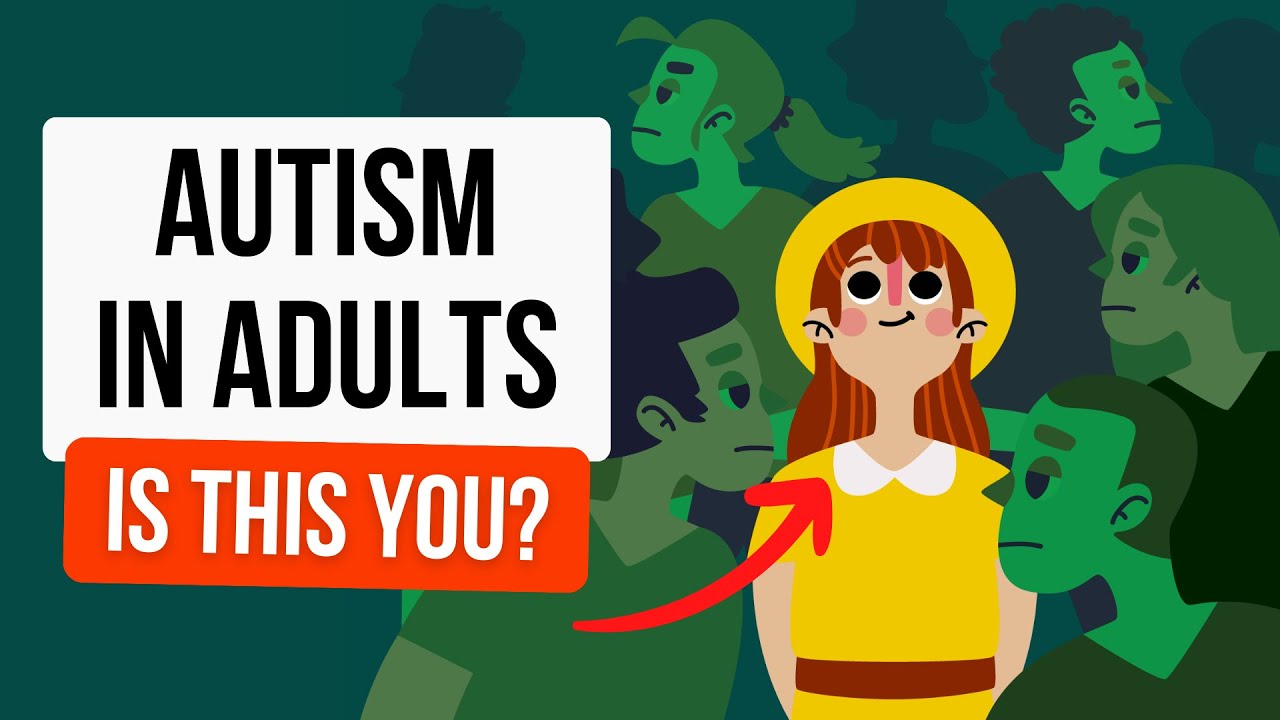
If you’re considering an adult autism diagnosis, you’re part of one of the fastest-growing health-seeking categories online.
Step 1: Talk to Your GP (UK) or PCP (US) Without Being Dismissed
This is where most adult autism diagnosis journeys stall. People book the appointment, soften their language, and get told to “manage stress.” Specific, written, calm communication changes the outcome.
Bring this to the appointment
- A lifetime trait list (not just recent). Childhood examples matter — every adult autism diagnosis must show traits were present from early development per DSM-5-TR.
- A completed AQ-10 score sheet — NICE recommends it as the first-line screen. A score of 6+ triggers a referral under NICE CG142.
- Old school reports or family observations describing communication, sensory, or social patterns in childhood.
- A short written summary of how this affects daily life — work, relationships, sleep, sensory load.
Sample Scripts (Use Word-for-Word)
UK opener (NHS GP):
“I’d like a referral for an adult autism diagnosis. I’ve completed the AQ-10 and scored [X], above the threshold NICE recommends for referral under CG142. I’ve brought a written summary of traits going back to childhood. If local NHS waits are long, I’d like to use my Right to Choose under the NHS Choice Framework.”
US opener (PCP):
“I’d like a referral for a comprehensive adult autism diagnosis. I’ve documented social communication, sensory, and restricted-interest patterns going back to childhood that meet DSM-5-TR criteria. Could you refer me to a psychologist or neuropsychologist who specialises in adults?”
If dismissed:
“I understand I’ve coped well in many areas. DSM-5-TR notes traits may not become fully apparent until social demands exceed capacity. I’d like the referral so a specialist can rule autism in or out.”
If they still refuse, ask for the refusal in writing. That alone usually changes the conversation.
Step 2: Choose Your Adult Autism Diagnosis Pathway — UK vs US
Where you live changes everything about an adult autism diagnosis — cost, wait, and process. Here is a side-by-side breakdown.
Comparison Table: UK vs US Pathways
| Factor | UK – NHS | UK – Right to Choose | UK – Private | US – Insurance | US – Self-Pay |
| Cost | Free | Free (NHS-funded) | £800 – £3,500 | $0 – $1,500 copay | $2,000 – $6,000 |
| Typical wait | ~17 months avg | 14–28 weeks | 2–8 weeks | 3–9 months | 4–12 weeks |
| How to start | GP referral | GP referral to approved provider | Self-refer to clinic | PCP + pre-auth | Self-refer |
| Tools used | ADOS-2, ADI-R, AQ-10, DISCO | ADOS-2, ADI-R, AQ-10 | ADOS-2, ADI-R, AQ-10, RAADS-R | ADOS-2, ADI-R, AQ, MIGDAS-2 | Same as insurance |
| Accepted by employers? | Yes | Yes | Yes | Yes | Yes |
UK adult autism diagnosis routes
NHS Right to Choose gives anyone registered with an English GP the legal right to choose an approved provider for an adult autism diagnosis. Approved providers include Clinical Partners, Psychiatry-UK, and Psicon. As of early 2026, reports estimated waits of 14 to 28 weeks, though local Integrated Care Board (ICB) instructions can extend that. NHS England’s Autism Statistics (March 2026) show 270,701 open referrals for suspected autism nationally.
Going fully private skips waiting lists. UK private adult autism diagnosis prices sit between £800 and £3,500 — London clinics £1,500–£2,500, regional £800–£1,200. Some private health insurance (Bupa, AXA, Vitality) covers part of an adult autism diagnosis cost — always check first.
US adult autism diagnosis routes
In the US, an adult autism diagnosis is most often delivered by a clinical psychologist, neuropsychologist, or psychiatrist with specialty training. Costs typically run $2,000 to $6,000 out of pocket. Insurance coverage varies dramatically: some plans cover an adult autism diagnosis as medically necessary under the Mental Health Parity Act, others classify it as a developmental assessment and exclude it.
Medicare may cover an adult autism diagnosis under Part B if deemed medically necessary. Medicaid coverage depends on the state. Always request a Letter of Medical Necessity from your PCP before submitting for insurance approval.
Step 3: What an Adult Autism Diagnosis Actually Involves (Plain English)
A common fear is that the adult autism diagnosis process is a single test you can fail. It isn’t. An adult autism diagnosis is built from a comprehensive clinical picture across multiple sessions — typically 4 to 8 hours of contact time.
Here are the main tools, translated.
ADOS-2 (Autism Diagnostic Observation Schedule)
The clinician guides you through structured activities and conversations, observing social communication, eye contact, gestures, imagination, and how you handle unstructured moments. Widely regarded as the gold-standard observational tool for an adult autism diagnosis. Module 4 is used for verbally fluent adults.
ADI-R (Autism Diagnostic Interview – Revised)
A long structured interview — usually with a parent or someone who knew you as a child — covering developmental history, communication milestones, and early social behaviour. If no informant is available, clinicians use childhood photos, school reports, or letters as substitutes.
AQ-10 (Autism Spectrum Quotient – 10 items)
A 10-item self-report recommended by NICE CG142 as the first-line screen for adult autism diagnosis in adults without moderate or severe learning disability. A score of 6+ warrants a full assessment. The AQ-10 is a screener, not a diagnosis.
RAADS-R (Ritvo Autism Asperger Diagnostic Scale – Revised)
An 80-item self-report covering social relatedness, sensory-motor, circumscribed interests, and language. Originally reported high sensitivity and specificity in clinic settings, but a 2021 PMC study found the RAADS-R lacks predictive validity when used as a stand-alone self-screener pre-assessment. Treat your RAADS-R score as a conversation-starter, not evidence.
🔗 Try the RAADS-R: clinician-reviewed version via Neurodirect. ⚠️ A high score does not confirm autism; a low score does not rule it out. Bring your result to a qualified clinician.
DSM-5-TR criteria
A formal adult autism diagnosis requires the clinician to confirm: persistent deficits in social communication and interaction; restricted, repetitive patterns; symptoms present from the early developmental period (even if masked); clinically significant functional impairment; and that traits are not better explained by intellectual disability.
Step 4: What to Do If You’re Refused
Refusal is more common than people think — and you have options in both countries.
UK: Use Your Right to Choose
If your GP refuses an adult autism diagnosis referral or insists on a five-year local NHS wait, you can invoke the NHS Choice Framework. As long as the provider is NHS-contracted, your GP must refer you. The National Autistic Society maintains a current list. If your GP still refuses, request the refusal in writing, then escalate to the practice manager and local ICB.
US: Appeal the Insurance Denial
If your insurer denies an adult autism diagnosis, the Council of Autism Service Providers’ appeals guide outlines a two-tier process:
- Internal appeal (Level 1): Submit a written appeal within the deadline in the denial letter (60–180 days). Include the Letter of Medical Necessity, prior screening results, DSM-5-TR evidence, and documentation of functional impairment.
- External review (Level 2): Under the Affordable Care Act, you have the legal right to an independent external review. The decision is binding.
If external review fails, contact your state’s Department of Insurance. Many states have autism mandates that override insurer policies.
Step 5: Waiting List Realities — and How to Use the Time
Whether the wait is two months or two years, that time is yours to use. Here’s what evidence-backed self-advocates do during an adult autism diagnosis wait.
- Document everything. Keep a diary of sensory triggers, social exhaustion, executive function struggles, and masking episodes. Invaluable data for your clinician.
- Gather childhood evidence. Photos, school reports, family stories, old medical notes. DSM-5-TR requires evidence of early-onset traits.
- Read lived-experience research. A 2023 PMC study captured the experience of late adult autism diagnosis and is widely cited.
- Connect with the autistic community. Reddit’s r/AutismInWomen, the National Autistic Society’s forums, and Embrace ASD all host adults at every stage of an adult autism diagnosis journey.
- See an autism-informed therapist. You don’t need a diagnosis for affirming therapy. Working through identity questions before assessment often improves outcomes.
- Build a regulation toolkit. Sensory-led grounding tools work whether you have a formal diagnosis or not. Our top 15 calming tools for autism round-up is a useful starting list while you wait.
Anonymised Adult Autism Diagnosis Journeys (Used With Consent)
Case 1: “Sarah,” 34, London
After two decades of anxiety treatment that “never quite landed,” Sarah completed the AQ-10 online and scored 8. Her NHS GP initially declined a referral, citing her successful career. Sarah returned with a printed copy of NICE CG142, a written symptom timeline, and a request to use her Right to Choose. She was referred to Clinical Partners and received her formal adult autism diagnosis 19 weeks later. She now uses noise-cancelling headphones at work under reasonable adjustments granted by HR.
Case 2: “Marcus,” 41, North Carolina
Marcus’s PCP referred him to a neuropsychologist after he brought a written summary of life-long sensory and social patterns. His insurer initially denied coverage for the adult autism diagnosis, citing “not medically necessary.” Marcus’s clinician submitted a Letter of Medical Necessity referencing DSM-5-TR and prior misdiagnosis of generalised anxiety disorder. The internal appeal was approved within 32 days. His total out-of-pocket cost was $480 against a $3,600 evaluation.
Both clients reviewed and approved the use of their anonymised stories.
Step 6: After the Adult Autism Diagnosis — Support, Work, Identity
A formal adult autism diagnosis is the beginning of a process, not the end of one.
Workplace accommodations. In the US, Title I of the Americans with Disabilities Act requires employers with 15+ employees to provide reasonable accommodations once a diagnosis is disclosed. In the UK, the Equality Act 2010 covers the same ground. Common adjustments include flexible scheduling, quiet workspaces, written instructions, noise-cancelling tools, and modified meeting expectations.
Therapeutic support. Therapists trained in autism adapt CBT, ACT, and coaching to autistic cognition. Occupational therapy supports sensory regulation and executive function. In the US, an adult autism diagnosis may unlock state-funded vocational rehabilitation services.
Career direction. A diagnosis often reframes job choice. If you’re rethinking your career fit, see our guide to the best jobs for autistic adults for occupations that suit common autistic strengths.
Identity adjustment. A 2023 PMC qualitative study on late adult autism diagnosis found two consistent emotional patterns: profound relief at finally having a framework that fits, and grief for years spent without one. Working with an autism-informed therapist during this transition is widely recommended.
Self-Identification — Is It Valid?
This section matters because the answer is more nuanced than the internet often makes it.
The factual position: A formal adult autism diagnosis is the only route to legal protections (ADA, Equality Act), workplace accommodations, and most clinical services. It is the only mechanism recognised by employers, schools, and insurers.
The community position: Researchers including Ardeleanu et al. (Autism, 2025) and the University of Washington Autism Center have published that inaccurate self-identification of autism appears uncommon among adults who have carefully researched the condition. Cost, waiting lists, gender bias in diagnostic tools, and clinician unfamiliarity with adult presentations all create barriers that disproportionately affect women, people of colour, and LGBTQ+ adults.
The practical position: Self-identification can be a valid framework for self-understanding and community belonging. It is not a substitute for formal evaluation when access to support, accommodations, or legal protections is needed. Many adults self-identify first and pursue formal adult autism diagnosis when life circumstances require it. If you’re still mapping your own traits, our autistic wheel breakdown is a helpful framework for naming where your support needs sit, and our explainer on whether side-glancing is always autism is one of several pieces that unpack specific traits clinicians look for.
Conclusion: From Suspicion to Answer
An adult autism diagnosis takes time, paperwork, and persistence. In return, it offers something that decades of “manage your stress” advice never could: an accurate map of how your brain actually works, and the legal and clinical leverage to ask for what you need.
If you’re at the start of this journey — or stuck in the middle of it — Epic Minds Therapy can help you map the next step. Our team works alongside adults, families, and clinicians across North Carolina and Maryland to coordinate referrals, prepare for assessments, and build individualised support after an adult autism diagnosis.
Skip the guesswork. Book a free 15-minute Adult Autism Pathway Call with Epic Minds Therapy. We’ll review where you are, map your options, and help you decide whether assessment, support, or both are the right next move — no pressure, no commitment. Schedule your free Pathway Call today!
Frequently Asked Questions
Can you really get an adult autism diagnosis at any age?
Yes. DSM-5-TR (US) and NICE CG142 (UK) confirm autism can be diagnosed at any age. JAMA Network Open (2024) found adult autism diagnosis rates rose 450% between 2011 and 2022 in the 26–34 age group.
How long does an adult autism diagnosis take?
Private routes 6–12 weeks. NHS Right to Choose 14–28 weeks. NHS local services average around 17 months in 2025/26. US insurance routes typically 3–9 months from referral to report.
Is the RAADS-R a valid test for adult autism diagnosis?
It’s a screening tool, not a diagnostic one. A 2021 PMC study found the RAADS-R lacks predictive validity as a stand-alone self-screener. Use the result as a conversation-starter with a qualified clinician.
Will an online or telehealth adult autism diagnosis be accepted?
Most UK and US employers, universities, and insurers accept telehealth evaluations from qualified clinicians. Some NHS authorities may want to review private or remote reports before adjusting care plans.
📚 Sources
- https://www.cdc.gov/autism/articles/prevalence-varies-across-us-communities.html
- https://pubmed.ncbi.nlm.nih.gov/39476234/
- https://pmc.ncbi.nlm.nih.gov/articles/PMC9077590/
- https://digital.nhs.uk/data-and-information/publications/statistical/autism-statistics/april-2025-to-march-2026
- https://bedslutonchildrenshealth.nhs.uk/neurodiversity-support/neurodevelopmental-assessment-and-diagnosis-process/autism-diagnostic-observation-schedule-ados-assessment/
- https://www.research.chop.edu/car-autism-roadmap/autism-diagnostic-interview-revised-adi-r
- https://www.ncbi.nlm.nih.gov/pmc/articles/PMC8452438/
- https://www.nice.org.uk/guidance/cg142
- https://www.autism.org.uk/what-we-do/news/autism-assessment-waiting-times-11
- https://journals.sagepub.com/doi/10.1177/13623613241297222