



ABA Therapy

The 90-Second Answer (Read This First)
Sensory overload is often missed by parents because it looks like defiance, attitude, or a “bad mood.” It is not. Sensory overload is an involuntary nervous-system response to too much input — sound, light, smell, touch, or social demand — that the brain cannot filter or process fast enough. Research suggests 53–95% of autistic children experience sensory processing differences, and 80%+ show signs of sensory overload regularly. Here’s sensory overload signs parents miss:
The 12 signs of sensory overload parents most often miss:
- Covering ears when “nothing is loud”
- Sudden aggression mid-activity
- Going floppy or limp (“noodle body”)
- Asking the same question on repeat
- Refusing specific clothing or tags
- Eating only beige or “safe” foods
- Meltdowns at the school gate (not at school)
- Squinting, hood-up, or hiding under tables
- Frequent headaches or stomachaches
- Sudden zoning out or “blanking”
- Stimming that ramps up fast
- Crying over “nothing”
The rest of this guide breaks each sign down, explains the difference between sensory overload, tantrums, meltdowns and shutdowns, gives you the 4 R’s response framework, and tells you when to call an OT versus a BCBA.
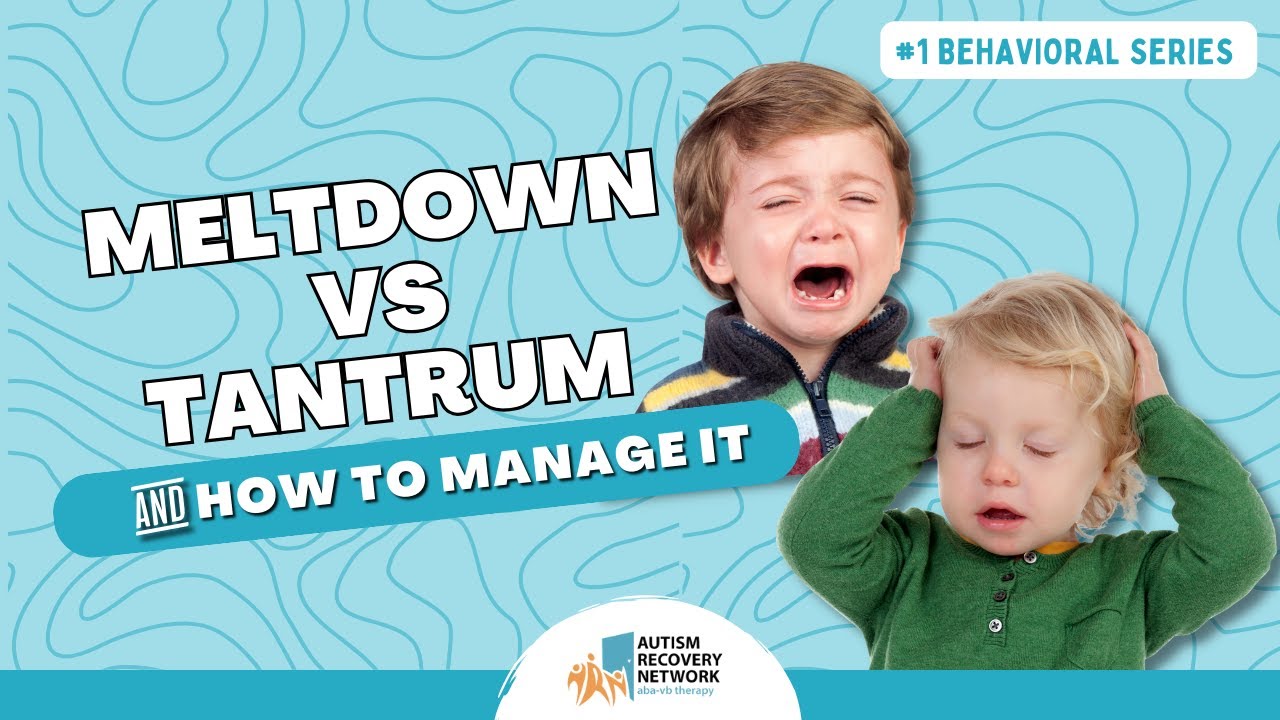
🎥 Watch: Tantrum vs Meltdown — Explained Video
Why Sensory Overload Looks Like “Bad Behaviour”
A child in sensory overload is not choosing to act out. Their brain is in a stress response — fight, flight, or freeze — long before the meltdown is visible. Most parents only spot the explosion; the build-up happens silently across minutes or hours of input.
Research published by the Autism Research Institute, the Cleveland Clinic, Children’s Hospital Colorado, and Seattle Children’s autism centre all confirm the same picture: sensory overload is involuntary, physiological, and not goal-directed. That single fact changes how every parent should respond.
The 12 Sensory Overload Signs Parents Miss (Detailed)
For each sign below: what it looks like → what it actually is → what to do in the moment.
1. Covering Ears When “Nothing Is Loud”
Looks like: Hands over ears in a quiet supermarket, café, or living room.
Actually is: The child is hearing the fridge hum, fluorescent lights buzzing, distant traffic, and three conversations at once. Their auditory filter is letting everything through. This is a classic early sensory overload signal.
Do in the moment: Offer noise-cancelling headphones or step into a quieter space. Don’t argue about whether the noise is “real.”
2. Sudden Aggression Mid-Activity
Looks like: A child happily playing, then hitting, pushing, or throwing — seemingly from nowhere.
Actually is: Cumulative sensory overload that has tipped over the edge. The aggression is the fight response.
Do in the moment: Calmly create distance, lower stimulation, and avoid demands. Behaviour analysis is for later — safety is for now.
3. Going Floppy or “Noodle Body”
Looks like: Suddenly slumping, refusing to stand, melting onto the floor.
Actually is: A shutdown-style response to sensory overload. The nervous system has flipped to “freeze.”
Do in the moment: Don’t lift, scold, or rush. Sit beside them. Lower lights and noise.
4. Asking the Same Question on Repeat
Looks like: “When are we going?” asked seven times in three minutes.
Actually is: A self-regulation strategy. Predictability calms a brain in sensory overload.
Do in the moment: Answer once verbally and once visually (write it down or draw it). Reduce surrounding input.
5. Refusing Specific Clothing or Tags
Looks like: Daily war over socks, seams, or “scratchy” jumpers.
Actually is: Tactile sensory overload. Childrens’ tactile thresholds vary widely, and certain textures genuinely register as painful.
Do in the moment: Cut tags out, choose seamless options, allow chosen clothing. This is regulation, not fussiness.
6. Eating Only Beige or “Safe” Foods
Looks like: Only nuggets, chips, plain pasta, dry crackers.
Actually is: A child managing oral, taste, smell, and texture overload by sticking to predictable input. Strongly linked to sensory processing differences.
Do in the moment: Don’t fight the meal. Refer to an OT for a graded food chaining plan. Keep mealtimes low-pressure.
7. Meltdowns At the School Gate (Not at School)
Looks like: A child described as “fine all day” who falls apart the moment they see you.
Actually is: After-school restraint collapse. They masked sensory overload all day and finally feel safe enough to release it.
Do in the moment: Skip questions about the day. Offer water, a snack, quiet, and zero demands for 30–60 minutes.
8. Squinting, Hood-Up, or Hiding Under Tables
Looks like: Pulling a hood low, ducking under furniture, squinting indoors.
Actually is: Visual sensory overload from overhead lights, screens, busy patterns, or simply too much “happening.”
Do in the moment: Let them stay covered. Dim lights where possible. Avoid forced eye contact.
9. Frequent Headaches or Stomachaches
Looks like: “My tummy hurts” every day, especially after school or social events.
Actually is: The autonomic nervous system reacting to ongoing sensory overload. Headaches and stomachaches are physical stress signals, not excuses.
Do in the moment: Believe them. Reduce the day’s remaining demands. Track patterns — what was the environment before the symptom?
10. Sudden Zoning Out or “Blanking”
Looks like: Staring through you, not answering, looking “lost.” Actually is: A quiet shutdown. Many children, especially girls, go inward when sensory overload peaks rather than outward. Do in the moment: Do not press. Sit beside them. Wait. Recovery from a shutdown can take 20–90+ minutes.
11. Stimming That Ramps Up Fast
Looks like: Rocking, hand-flapping, humming or finger-tapping that escalates quickly.
Actually is: A self-regulation tool the body uses to discharge sensory overload. The escalation tells you the load is rising.
Do in the moment: Let the stim continue (unless unsafe). Reduce input. Many calming tools support regulation — see our guide to the top 15 calming tools for autism.
12. Crying Over “Nothing”
Looks like: Sobbing over a wrong-coloured cup, a dropped sock, a tiny scratch.
Actually is: The “wrong cup” is the final straw on a stack of unseen sensory overload. The cup isn’t the cause; it’s the trigger.
Do in the moment: Validate the feeling without trying to fix the cup. The cup was never the point.
Sensory Overload vs Tantrum vs Meltdown vs Shutdown
These four words get used interchangeably online. They are not the same. The table below is built from clinical sources including Seattle Children’s, the Autism Research Institute, Ambitious about Autism, and Leicestershire Partnership NHS Trust.
| Feature | Tantrum | Sensory Overload | Meltdown | Shutdown |
| Cause | Frustration / wanting something | Too much sensory input | Cumulative stress, overload, or demand | Same as meltdown, different response |
| Control | Some voluntary control | Involuntary stress response | Involuntary, complete loss of control | Involuntary, withdrawal |
| Trigger | A specific denied want | Environment (sound, light, touch, smell) | Often unclear — many small triggers stack | Same as meltdown |
| Stops when… | Want is met or attention removed | Input is reduced | Nervous system resets (20–90+ min) | Recovery time and safety restored |
| Looks like | Loud, dramatic, watching you | Covering ears, fidgeting, withdrawing | Screaming, kicking, crying, aggression | Going quiet, floppy, hiding, blanking |
| Audience needed? | Usually yes | No | No | No |
| Right response | Boundaries, ignore the demand | Reduce input fast | Reduce, reassure, regulate, repair | Quiet presence, zero demands |
The Recovery Curve: Why It Takes 20–90 Minutes to Come Back to Baseline
Recovery from sensory overload is not a switch — it is a curve. The Autism Research Institute reports recovery time up to 20 minutes or more after the stressor is removed. For meltdowns or shutdowns following intense sensory overload, recovery can run 30–90 minutes, and after-school restraint collapse can take an entire evening.
The curve, in three phases:
- Crash phase (0–10 min): Nervous system still hyperactivated. Cortisol high. Trying to talk to your child here is like trying to teach during a fire drill.
- Settling phase (10–45 min): Heart rate slows. The child may seek a stim, a snack, water, a parent, or silence. This is when presence matters more than words.
- Re-engagement phase (45–90 min): Speech returns. Eye contact (if the child uses it) returns. Curiosity returns. Now you can talk — gently — about what happened.
Pushing for explanation, apology, or reflection during phase 1 or 2 typically extends the recovery curve, not shortens it.
What to Do in the Moment: The 4 R’s of Sensory Overload Response
A practical four-step framework clinicians use to support a child during and after sensory overload:
Reduce
Take input away. Lower lights. Mute the TV. Step outside. Move to the car. Move to a quiet corner. Less is the goal — every removed input drops the cortisol load.
Reassure
Use few words and a calm body. “I’m here. You’re safe.” Avoid eye contact demands. Avoid touch unless your child clearly wants it. Your nervous system co-regulates theirs.
Regulate
Offer regulation tools the child has used successfully before: chewable, fidget, weighted blanket, pressure squeeze, headphones, swing, water. This is not the time to introduce new tools.
Repair
After the recovery curve completes — usually 30–90 minutes later — reconnect. Acknowledge what happened without blame. “That was a tough one. I’m glad we’re back.” Repair builds the trust that prevents the next sensory overload from becoming a full meltdown.
What NOT to Do During Sensory Overload
The most common parent errors, all of which extend or escalate the episode:
- ❌ Don’t demand eye contact. Forced eye contact adds sensory load.
- ❌ Don’t say “use your words.” During sensory overload, the language area of the brain often goes offline.
- ❌ Don’t issue consequences mid-overload. The behaviour is involuntary. Discipline cannot teach a nervous system to filter input.
- ❌ Don’t reason, lecture, or explain. Verbal processing is reduced during sensory overload.
- ❌ Don’t ask “what’s wrong?” They usually don’t know yet. They will know in 60–90 minutes.
- ❌ Don’t physically restrain unless safety is at risk. Restraint increases distress in almost every case.
- ❌ Don’t tell them to “calm down.” It does not work, and most autistic adults report it made things worse as children.
Real Parent Quotes (Anonymised, Used With Consent)
“For three years we thought our daughter was ‘manipulative’ because she only melted down with me at pickup. Turns out she was holding it together at school all day. Once we understood after-school restraint collapse, everything changed.” — Mother of an autistic 7-year-old, North Carolina
“We were the parents that thought ‘pick your battles’ meant winning the sock war. When the OT explained tactile sensory overload, my son and I both cried. He wasn’t being defiant. The seam genuinely hurt.” — Father of an autistic 5-year-old, Maryland
“He’d scream when I sang Happy Birthday. People judged me. They didn’t know that for him, a room full of people singing was like a fire alarm in his head.” — Mother of an autistic 4-year-old, Virginia
OT or BCBA? When to Call Which Professional
Both occupational therapists (OTs) and Board Certified Behavior Analysts (BCBAs) help with sensory overload. They do different jobs — best evidence is they work together.
Call an Occupational Therapist (OT) when:
- You want a sensory profile identifying which senses are over- or under-responsive
- Your child needs help with fine or gross motor skills affected by sensory processing
- You need help with specific tasks: dressing, eating, brushing teeth, handwriting, balance
- You want a sensory diet — a personalised daily plan of regulating sensory activities
- The American Academy of Pediatrics (AAP) recommends OT assessment for children showing sensory processing concerns
Call a Board Certified Behavior Analyst (BCBA) when:
- A behaviour driven by sensory overload is affecting safety, learning, or relationships
- You want a function-based analysis of why a meltdown is happening
- You need a behaviour support plan that integrates the OT’s sensory inputs
- You want a clinician who can train you and the school on consistent responses across settings
Call both when:
- The picture is complex — sensory overload affecting eating, sleep, and school behaviour
- Your child has an autism diagnosis and you want coordinated care
- Research consistently shows OT + ABA collaboration leads to better outcomes than either alone
Curious how sensory profiles map onto broader autism traits? See our autistic wheel breakdown for the strengths-and-support-needs framework many clinicians now use.
A Note on Specific Behaviours: Side-Glancing, Squinting, Eye-Avoiding
Side-glancing, squinting, and “looking through” people often co-occur with sensory overload but are not always caused by it. Our explainer on whether side-glancing is always autism walks through the differential.
Looking Ahead: Sensory Overload Does Not Stay a Childhood Issue
Sensory overload changes shape across the lifespan, but it rarely disappears entirely. Many autistic adults manage sensory load through career choice, environment design, and sensory tools. If you’re curious how this plays out long-term, our guide to the best jobs for autistic adults covers roles that suit common sensory profiles.
Conclusion: From Reading the Signs to Building the Response
You came here because something kept happening and “bad behaviour” didn’t fit. You were right. Sensory overload is real, measurable, and supportable — and the difference between a child who feels misunderstood and one who feels safe is often a parent who learned to read the signs early.
If you’d like a clinician’s eyes on your child’s specific pattern, Epic Minds Therapy offers in-home and clinic-based ABA, OT collaboration, and sensory-informed parent coaching across North Carolina, Maryland, and Virginia.
📞 Book a free 20-minute Sensory Strategy Call. We’ll look at your child’s specific signs, talk through your toughest 30 minutes of the day, and map the next concrete step — assessment, OT referral, or in-home support. No script, no sales pitch.
Reserve your Sensory Strategy Call — limited slots each week.
Frequently Asked Questions
Q: What does sensory overload feel like for a child?
A: Autistic adults describing childhood sensory overload commonly report it as “everything at once” — sounds, lights, textures, and smells stacking up with no filter, ending in physical pain, panic, or shutdown.
Q: How long does sensory overload usually last?
A: The trigger response can subside in 5–20 minutes once input is reduced. Full recovery to baseline takes 20–90 minutes for most children. Shutdowns and post-school crashes can last several hours.
Q: Is sensory overload only an autism thing?
A: No. Sensory overload is reported in autism, ADHD, sensory processing disorder, PTSD, anxiety disorders, and some children with no diagnosis at all. It is more frequent and intense in autistic children.
Q: Can sensory overload happen without any obvious trigger?
A: Yes. Most overload events are cumulative — small inputs over hours that finally tip the system. Parents often see the last straw, not the stack.
Sources
- https://www.medicalnewstoday.com/articles/sensory-overload
- https://my.clevelandclinic.org/health/diseases/sensory-processing-disorder-spd
- https://autism.org/meltdowns-calming-techniques-in-autism/
- https://www.seattlechildrens.org/clinics/autism-center/the-autism-blog/autistic-meltdowns-shutdowns-burnout/
- https://www.leicspart.nhs.uk/autism-space/health-and-lifestyle/meltdowns-and-shutdowns/
- https://www.autism.org.uk/advice-and-guidance/about-autism/sensory-processing
- https://www.autismspeaks.org/sensory-issues
- https://autismawarenesscentre.com/what-does-sensory-overload-look-like-and-how-can-we-help/
- https://pmc.ncbi.nlm.nih.gov/articles/PMC8217662/
- https://wfot.org/about/about-occupational-therapy