



ABA Therapy
Parents walk out of a BCBA meeting with three letters echoing in their heads: DTT. It sounds clinical, even a little intimidating. It doesn’t have to be. Discrete Trial Training (DTT) is a structured ABA teaching method that breaks complex skills into small, repeatable steps. Each step is delivered as a quick three-part trial: instruction, response, and consequence with immediate reinforcement. Therapists use DTT to teach autistic children language, attention, imitation, and academic skills through clear cues, predictable structure, and tight feedback loops.
What Is Discrete Trial Training? A Quick Definition
Discrete Trial Training, sometimes called discrete trial teaching, is a one-on-one instruction format rooted in applied behavior analysis. Psychologist Ivar Lovaas at UCLA formalized the method through his early autism research in the 1960s and 1970s. Today, DTT remains one of the most studied ABA therapy techniques in clinical use worldwide.
Every trial follows the same skeleton. Memorize this and DTT stops feeling mysterious.
- Antecedent: the therapist gives a clear instruction or stimulus (“Touch red”)
- Behavior: the child responds — correctly, incorrectly, or not at all
- Consequence: reinforcement for correct answers, a brief correction otherwise
- Inter-trial interval: a short pause before the next trial begins
Each loop takes seconds. A 30-minute session can stack dozens of trials, which is where the power of repetition lives.
DTT in Action: A Real Scenario
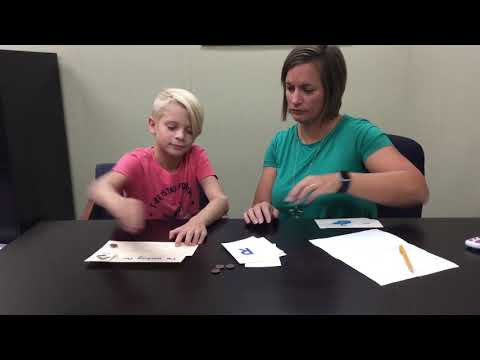
Maya is 4. She doesn’t yet point to common objects on request. Her therapist sets two flashcards on the table: a cup and a shoe.
“Maya, touch cup.”
Maya touches the shoe. The therapist gently models the correct answer, resets, and tries again with a partial prompt. This time Maya touches the cup. She earns a high-five and three seconds with her favorite spinner. After 12 trials, she’s responding accurately without prompts. That’s DTT in motion, small wins, stacked fast.
Skills DTT Commonly Targets in DTT Autism Programs
In most DTT autism programs, target skills fall into a few buckets:
- Receptive language (following instructions, identifying objects)
- Expressive language (labeling, requesting)
- Imitation (motor, vocal, object-based)
- Pre-academics (matching, sorting, colors, numbers)
- Social foundations (eye contact, turn-taking)
- Self-help routines (basic dressing, hygiene steps)
Each skill is broken into the smallest teachable unit, mastered through repetition, then chained into something larger and more functional.
DTT vs Naturalistic Teaching: Two Sides of One Toolkit
The DTT vs naturalistic teaching question shows up in nearly every parent meeting. Both fall under ABA, but the delivery differs. DTT is structured, table-based, and adult-led. Natural environment teaching (NET) follows the child’s lead during play and daily routines. Related approaches like Pivotal Response Training build on the same naturalistic philosophy. A 2024 scoping review in Behavioral Interventions found DTT efficacious at building new skills but flagged weaker evidence for generalization across settings. The strongest programs blend both — DTT to teach the skill, NET to carry it into the real world.
What the Research Actually Shows
The National Clearinghouse on Autism Evidence and Practice classifies DTT as an evidence-based practice for learners aged 3 to 14, backed by multiple single-case studies reviewed by the AFIRM team at UNC Chapel Hill. A 2024 NIH-indexed study tracking 93 autistic individuals reported statistically significant gains in target behaviors when DTT was paired with naturalistic environment training. Recent comparison research also shows that embedded DTT can reduce problem behavior while still teaching skills effectively, especially when reinforced through structured parent training at home.
Curious whether DTT fits your child? The team at Epic Minds builds ABA programs from the full toolkit: structured trials, naturalistic play, and the smart mix between. Talk to a behavior therapist who’ll map your child’s real needs instead of running a template. Send us a message and let’s figure it out together.
Frequently Asked Questions
What is discrete trial training in ABA therapy?
Discrete trial training is a structured ABA teaching method that splits a skill into a three-part loop — instruction, response, consequence — repeated until the child masters it. It’s typically delivered one-on-one in a low-distraction setting and is one of the oldest and most studied ABA therapy techniques.
Is DTT only used for children with autism?
No. DTT is most widely used in autism services, but the technique applies to learners with developmental delays, intellectual disabilities, and language disorders. The format works wherever a complex skill benefits from being broken into smaller, repeatable steps.
How long does a DTT session usually last?
Sessions typically run 30 minutes to 2 hours, depending on the child’s age, attention span, and goals. A single session can include dozens of short trials with built-in breaks. Total weekly hours range from a few up to 25+ for intensive early intervention.
What’s the difference between DTT and naturalistic teaching? DTT is structured, adult-led, and table-based. Naturalistic teaching follows the child’s interests during play or daily routines. Most quality ABA programs use both — DTT for fast skill acquisition, naturalistic teaching for generalization into real-life settings.
Sources: